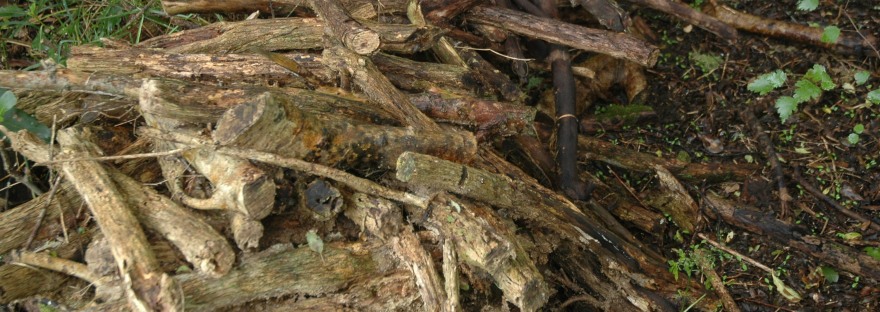
Unseen below ground is a vast world, teeming with life. Well at least we hope so… but sadly so much of our soil is now depleted. However, we still have time to restore the richness of the soil by increasing the crucial levels of beneficial microorganisms, fungi, and bacteria.
But what about the humble earthworm – including our native species? Like most gardeners, I’m excited to see earthworms in the garden and wonder if we tend to know intuitively that they are good for fertility and soil health, but I suspect most of us know very little about them. To delve into the topic of earthworms, I talked to Prof Steven Trewick, Professor in Evolutionary Ecology at Massey University.
Earthworms are specialists
Earthworms belong to the group of invertebrate animals known as annelids, or segmented worms, which include more than 20,000 species around the globe. They are highly diverse in the way they live, but because they dehydrate in the open, they are constrained to living below the surface of the soil or in the sea.
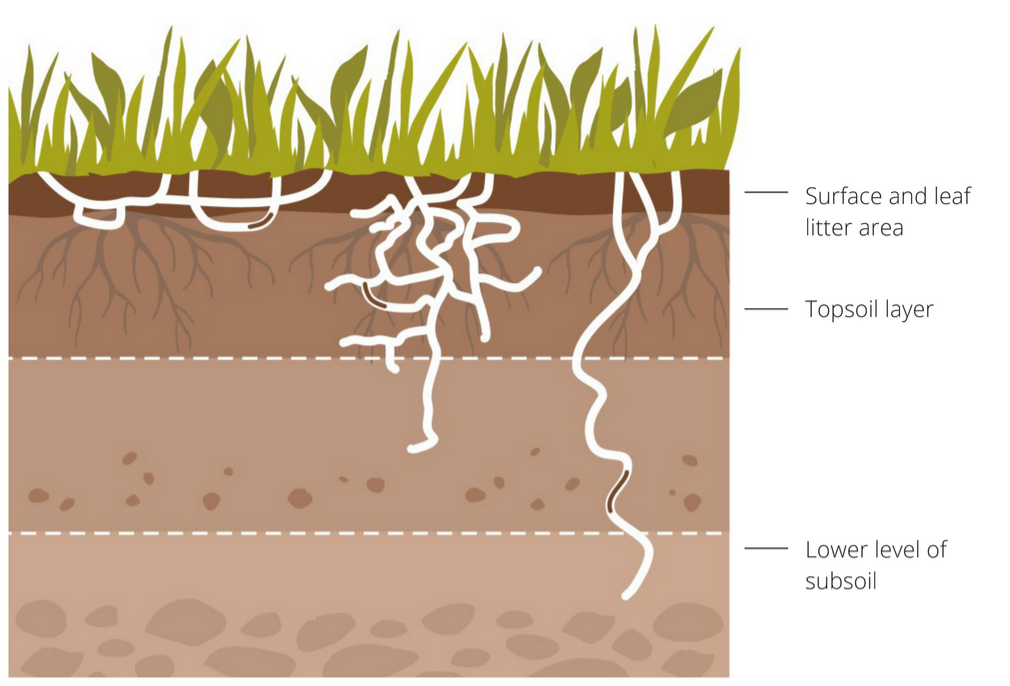
Trewick describes how earthworm species are specialised to different areas and the ground can be partitioned into three zones where the different species live:
- Epigeic earthworms live in the surface and leaf litter area and break down dead organic matter.
- Endogeic earthworms live in the in the topsoil layer and create horizontal burrows.
- Anecic earthworms live in the lower level of subsoil. They make permanent vertical burrows and glean nutrients from minerals and organic matter. These subsoil species can be big and include a bioluminescent species of native worm known as Octochaetus multiporus that can grow up to 30cm long1.
Some of the introduced worms are specialists of pastures and others thrive in gardens, while the tiger worm mostly lives in compost heaps and doesn’t do well if moved into the garden. As Trewick says, it shows us how different the ecologies of different species are.
New Zealand’s native earthworms
Aotearoa New Zealand is also home to around 180 native species of earthworms and Trewick says we are finding more species all the time. The native earthworms belong to the family of Megascolecidae, and they live across our country’s forestlands.
However, Trewick says we don’t know if native worms are surviving around the country, and the general view is that as you get into pasture and urban areas the native worms disappear. But those are two correlated observations (one observation that appears to be related with another), and it might not be completely cause and effect; there may be more going on in the deeper soil. However, these days when we see a worm in our gardens or above soil after rain, it is likely to be one of the introduced Lumbricidae earthworms. These species were brought to Aotearoa New Zealand from Europe.
Garden fertility and earthworms
Worms create burrows and pores in the soil, which aid growth by aerating the soil and creating space for water and root growth. They also break down, move and recycle organic matter, creating richer and more diverse soil structure which is very important for plant growth. Pavlis (2020) suggests the microbial activity in worm casts is 10-20 times higher than it is in soil.2 Trewick says, that like every animal on the planet, it’s the microbiome associated with their gut that enables them to do what they do.
The study of soil microbiology, earthworms and fertility is complex and ongoing, but most of gardeners and growers will agree, the presence of earthworms is a pretty good sign in a garden.
How can we support earthworm populations?
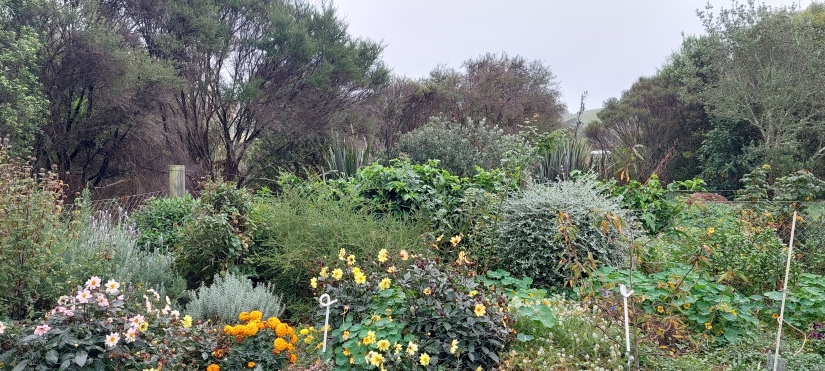
To support earthworms, first and foremost, we need to think of our gardens as habitats. Trewick says, “Diversity is the answer; the garden shouldn’t be thought of as some sort of clinical formalised arrangement of things. You have to allow the process to work. Having a messy garden is good for diversity. We have to share the space a bit.”
“It’s not how you grow stuff, it’s how you dump stuff!”
This fantastic quote from Trewick is a perfect way to describe what we need to be thinking about in our gardens. Aim to always be increasing organic matter — mulch, mulch, and more mulch. This has several functions; it keeps your soil moist, providing a safer environment for the worms and microbiology; and it provides organic matter and food. This in turn decreases the need to cultivate, which helps increase your worm population. Read more about mulching here.
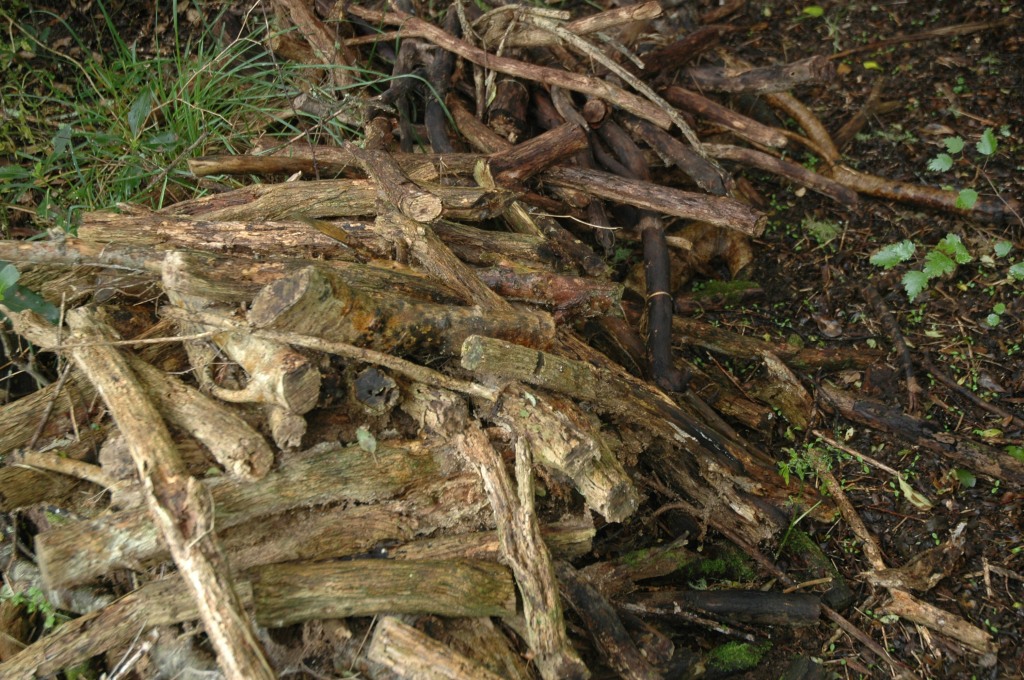
To support earthworm populations Trewick suggests that gardeners:
- leave things to break down, be it a pile of logs or leaf litter
- keep the circle of fertility going by giving back regularly
- keep compacted areas to a minimum – reduce pathway size between beds and keep heavy machinery off your gardens
- use low or no till to reduce the disturbance to earthworms and microorganisms
- reduce or stop using pesticides and herbicides.
Perennial plants are also a bonus for earthworms because you can create undisturbed habitats where they can thrive. You can read more about perennial plants here.
How can we design our gardens to support earthworms?
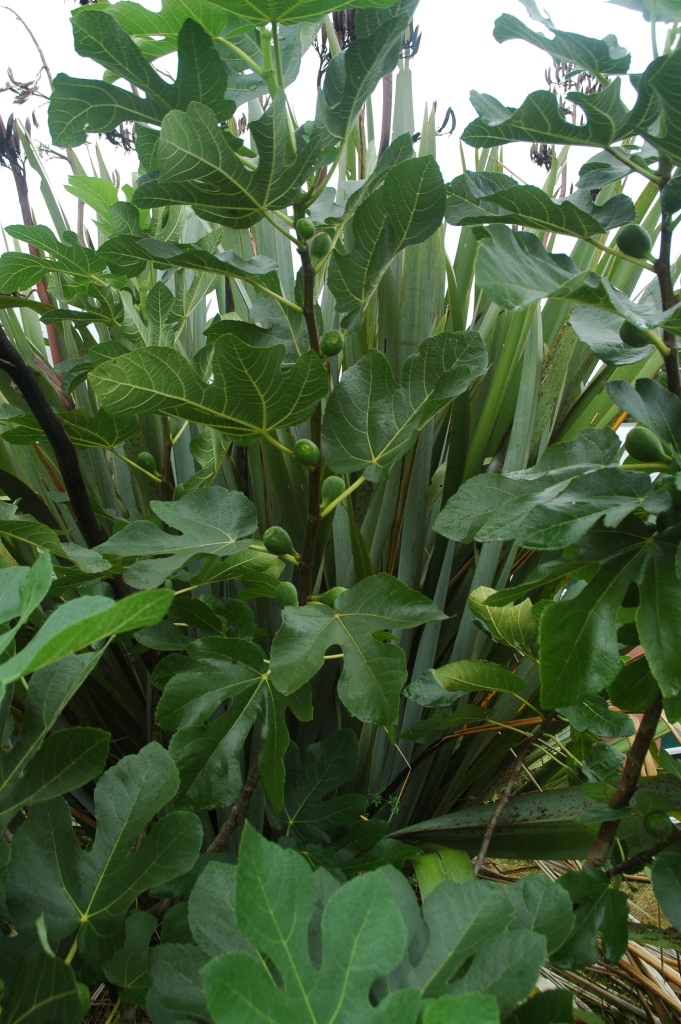
The edges are an importance part of our human spaces. The edges are where diversity can thrive; our forests and scrub edges encourage a crossover of diversity into more cultivated areas. However, Trewick says, one problem is our large-scale paddocks as they can be overwhelming to native fauna.
In a home garden too, when we design our vegetable patches as highly controlled zones, surrounded by single species lawn and clipped hedges, we are reducing habitat. Trewick suggests, if we do feel the need to control the vege or flower patch, we can have ‘messy’ edges where biodiversity can flourish. Who knows, maybe there might be some bio-luminescent native earthworms trolling down there!
Further resources
Wild Life New Zealand Textbook focusing on the unique plants and animals of Aotearoa by Trewick, S & Morgan-Richards, M.
Phoenix Group Evolutionary Ecology & Genetics @ Te Taha Tawhiti https://evolves.massey.ac.nz
References
- Science Learning hub (2018). Octochaetus multiporus. sciencelearn.org.nz/resources/21-octochaetus-multiporus ↩︎
- Pavlis, R. (2020). Soil Science for Gardeners. New Society Publishers ↩︎