
What are perennials?
Perennials are plants that grow for more than two years and, while we often think of perennials as trees and shrubs, some vegetables are also perennial. Perennials can be evergreen and keep their leaves all year round, or herbaceous, i.e. their tops die down in winter and their roots stay alive and come away in spring.
Why plant perennial vegetables?
In the garden, perennial vegetables offer some advantages over annuals. Once planted, you rarely need to disturb the soil which means soil life and microorganisms can do their thing while you nurture the plants above the soil and harvest their goodies. Perennials also provide habitat for animals as you are not replanting and disturbing them as often. Some perennials can survive long dry periods as they have deep root systems so the plants are better adapted to tap into deeper stores of water in tough climate times.
Designing with perennial vegetables
Decisions in the garden are continuous. However, initial planning design for perennials is important because some, like asparagus, you may have for 20 years or more.
One of the best bits of advice I have had is to consider water needs when planting perennials. Perennials generally require less water than annuals, so if you group annuals together it allows you to target your water use towards them and less on the perennials.
Perennials often require less maintenance, so they can be a little further away in areas you visit less often, such as the boarders of your garden. However, it is also wise to check whether they have the potential to take over a space and so require a bit of thought before planting.
Mulching, weed control and fertilising
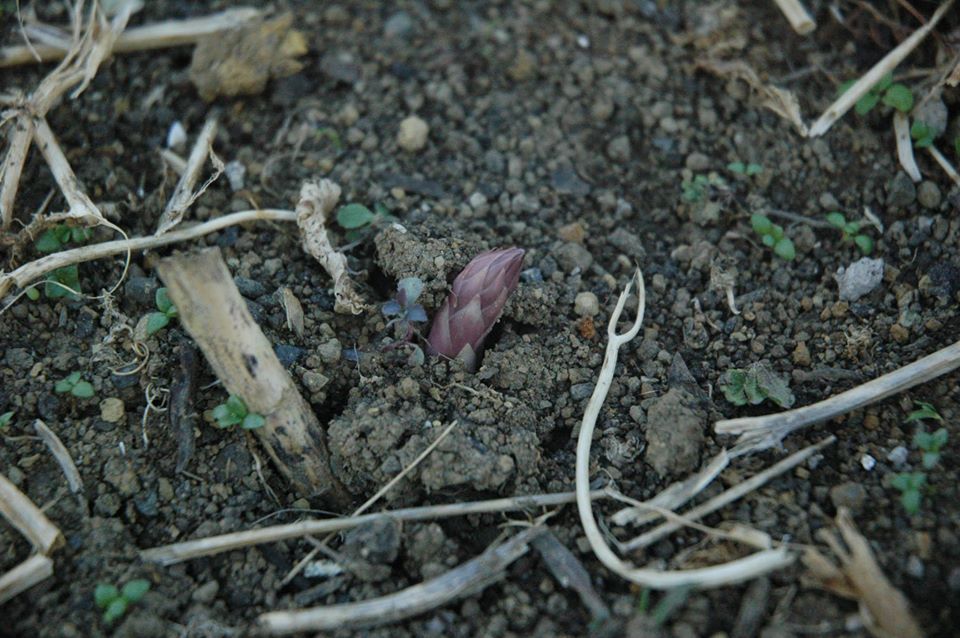
Perennials benefit from a good mulch. Mulching adds nutrients, helps retain moisture in summer, reduces leaching from heavy rainfall and reduces weed competition. Some perennials can be cut back and used as a mulch, which also returns some nutrients back to the soil. Asparagus fronds are a good example, they can be chopped and dropped in place when they turn yellow in late autumn. You can read more about mulching here.
Weeds can be hard to eradicate with perennials as you don’t want to disturb and cut the roots of the plants trying to pull out deep rooted weeds. Weeds can also get well established before you notice them as you tend to check perennials less often than annuals. Getting to the weeds early and providing a good layer of mulch can both help with weed control. Although I must admit, my asparagus seems to be surviving the onslaught of weeds that I never seem to get to!
Perennials do need feeding, especially when you are harvesting from the plants. Well made compost and mulching increases organic matter and both help feed your plants. I also use a good quality seaweed fertiliser.
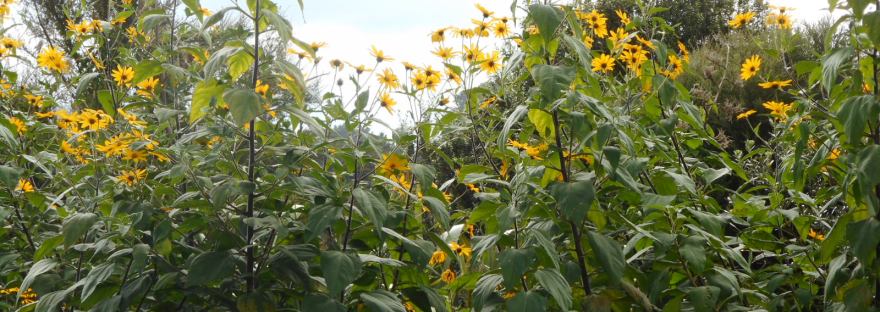
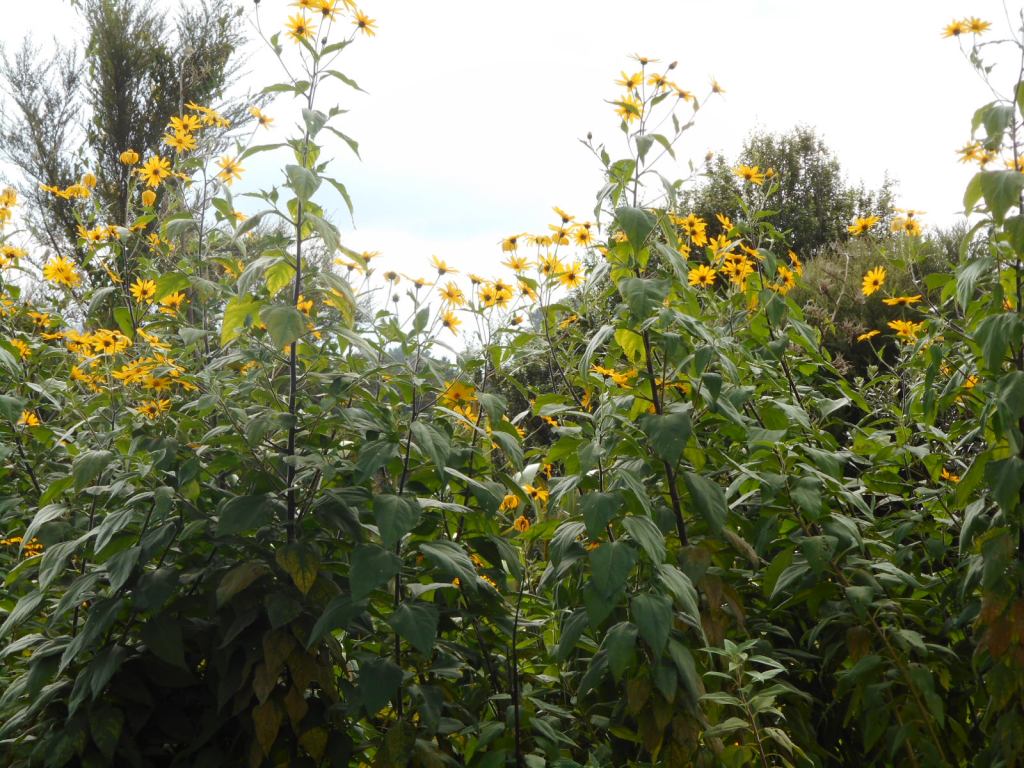
Some perennials can be cut back to provide compost materials. For example, once the Jerusalem artichokes have finished flowering and die back, I prune them down and use them as a carbon source in my compost.
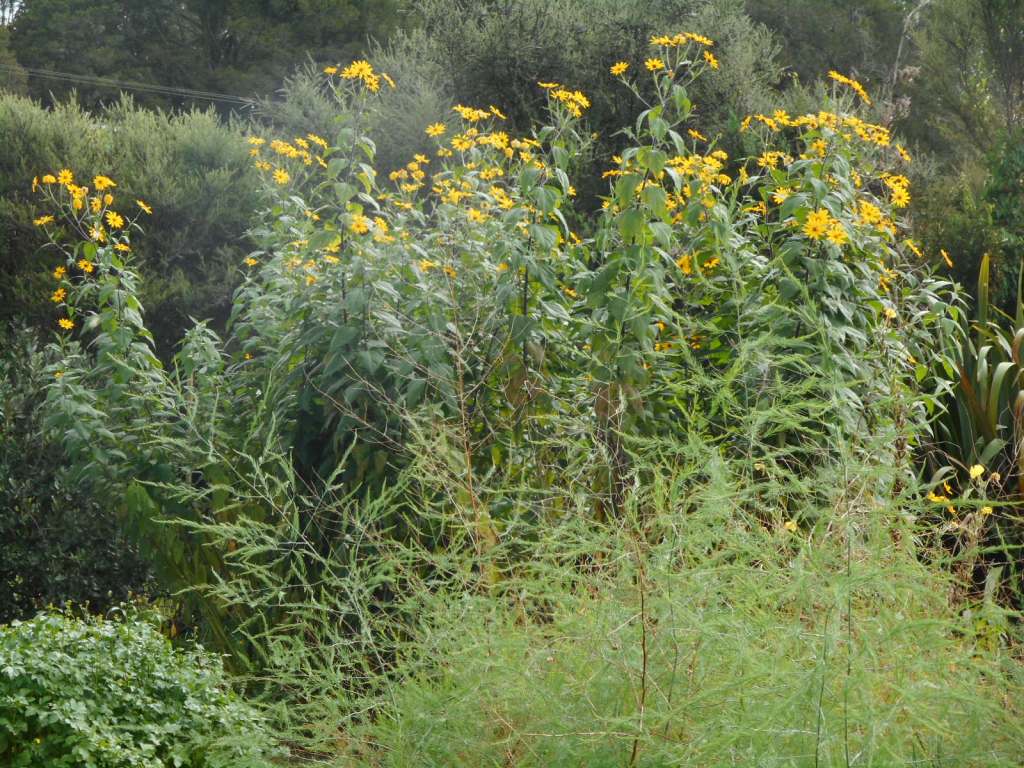
flowering jerusalem artichokes in the background.
Sourcing perennial vegetables
Perennial vegetables are not always easy to source, but the search is worth it. Most of our perennial vegetables have come from specialty stores and some from friends. We grow asparagus, sorrel, jerusalem artichoke and New Zealand spinach. Some plants are available in general garden stores, but it is worth looking at online specialty growers and definitely your friend’s and neighbour’s gardens.
Dividing perennials and sharing them around serves two functions, keeps you and your friends supplied in plants and also stops overcrowding.
Happy gardening


1 thought on “Perennial vegetables”