Building fertility in the garden, Flowers, herbs and weeds, Garden design, Growing food, Uncategorized

Understanding Polycropping: Benefits and Techniques

I first interviewed Coral Remiro in 2024. At that time, she was the farm manager at Earth Stewards, an urban farm in Kirikiriroa, Hamilton. We had a fascinating chat about the successful polycropping method she’d implemented on the farm.

Polycropping is a technique that involves growing different crops together in a garden bed instead of using the more traditional monocropping planting method. It can be used in a small garden or larger growing system.
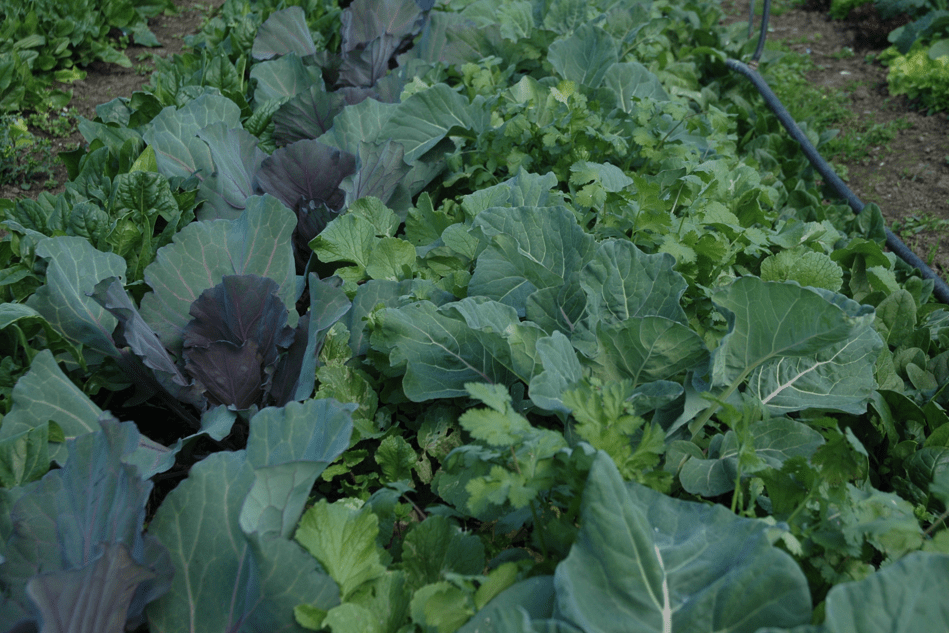
Spinach, cabbages, radish and coriander growing in a polycropping system

Coral has found that one of the advantages of polycropping is an increase in the number of plants that can be grown in a small space. This has created more space to plant cover crops. She says, this has been a game changer as the cover crops reduce weed pressure, add a source of nitrogen, and provide more compost material.

Polycropping also increases biological diversity in and above the soil, directly helping to maintain a balanced system. Different insects, microorganisms, and other animals are attracted to the different habitats provided by different plants in close proximity. 

Polycropping is complicated until, as Coral says, “you can get your head around it.” She does not spend time these days considering companion planting so much as thinking about how plants grow. She explains that there are some key concepts to consider when grouping plants together including:

  • how much space is available around a plant as it grows 
  • how long it takes for each type of plant to reach harvest size
  • light requirements for each plant
  • how different plants grow – vertically or horizontally
  • if the plants are root or leaf crops.

In her planning Coral thinks about how to create guilds – groupings of plants that support each other. She has found the best way to plan her garden is to organise plants into groups based on how long it takes for them to grow to harvest size: short, medium, and long-term. Plants like tomatoes and brassica take the longest to grow and she says these are the ‘hero’ plants. She suggests using these plants as a base to work around and then planting faster growing and smaller plants around these, for example, coriander and radish. 
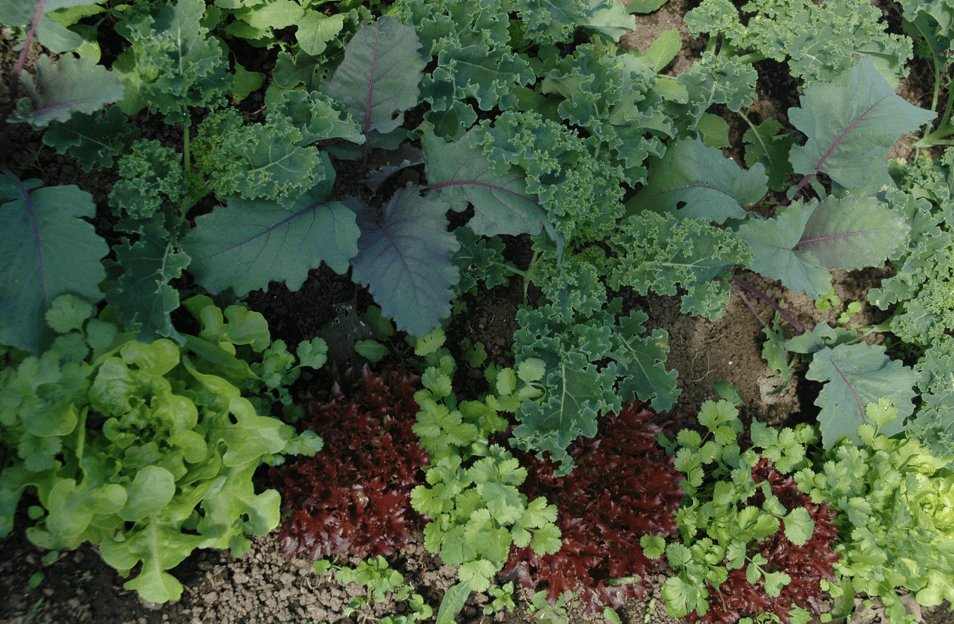
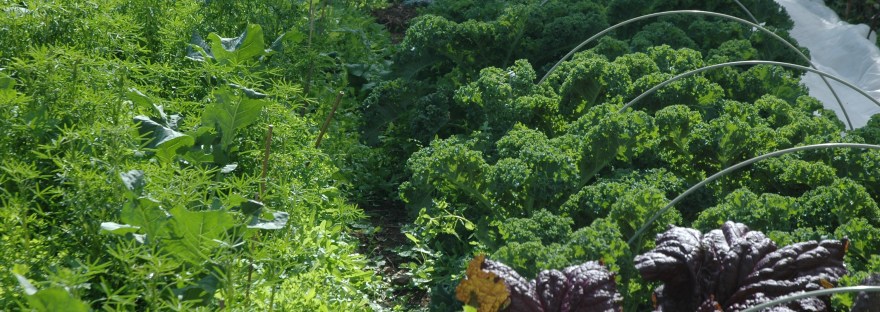
Kale, lettuce and coriander

Like all gardeners and growers, Coral has learnt some lessons the hard way. For example, she planted lots of beetroot plants around other plants without considering how much light they needed. She says, one of the keys to success in polycropping is observation and recording what works well and what doesn’t. I would also suggest taking a photo before you forget – seasons pass fast!
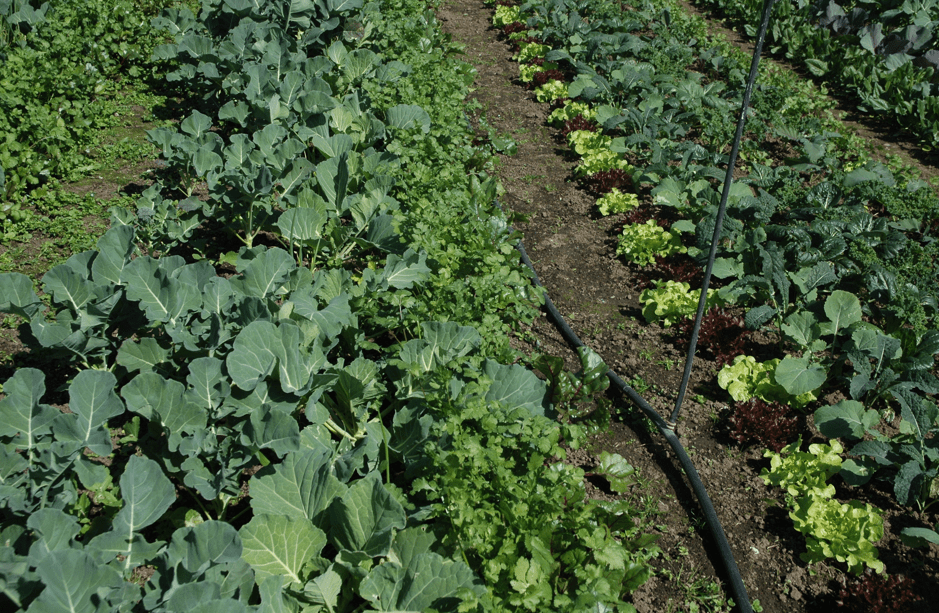
Brassica surrounded by a range of plants including lettuce and coriander

What I really appreciated when talking to Coral was her openness to trying new things in the garden. I also valued her approach to creating diversity. It’s always good to remember that in a garden, diversity can mitigate risk. 

Visiting Earth Stewarts Urban Farm https://earthstewards.nz/ and chatting to Coral was an inspiration. 

Happy Gardening
Building fertility in the garden, Garden design, Growing food, Uncategorized

Benefits of Crop Rotation: A Sustainable Gardening Practice

Crop rotation is simply organising plants into different plant families and rotating the plantings over time, or basically not planting the same annual crops in the same place each year.

Crop rotation does require some planning. If detailed planning is your thing, you can create a long-term rotation design with a detailed plan (probably more for a market gardener), or you can also keep it simple and incorporate at least some rotation around the garden.  

Sprouting purple broccoli flourishing after a crop of potatoes

Different plants require different nutrient levels, so rotating your crops can help reduce the number of inputs you may need to use. A crop that is a heavy feeder can be followed by something that requires less nutrients, and a crop with deep roots followed by a shallow rooted crop.

Another advantage of crop rotation is reducing the potential for soil-borne disease. This is because plants in the same family are more likely to suffer from the same issues. For example, planting brassicas (e.g., kale, broccoli, cabbage, and cauliflower) in the same plot every year increases the risk of club-root, because the fungal disease’s spores can persist in the soil. It’s a good idea to leave a gap of at least three or four years between plantings.

Rotating crops can help reduce insect damage by preventing a build-up of damaging insects in a crop year after year. 

Another advantage is different crops work on the soil in unique way, for example, deep rooting crops can improve the soil structure.

It is useful to have some understanding of the different families of plants if you want to use crop rotation. I also find it useful to keep seeds stored by the different groups in containers. 

  • Peas and beans (Fabaceae or legume)
  • Broccoli, kales, cabbages, cauliflower, radish (Brassicaceae, or brassica – cabbage family)
  • Beetroot, chards and silverbeet (Amaranthaceae)
  • Leeks, onions, spring onions, garlic (Allium family)
  • Courgette, melons (Cucurbitaceae)
  • Carrots, celeriac, celery (Umbellifeae)
  • Tomatoes, capsicums, potatoes, and eggplants (Solanaceae – nightshade family)
  • Corn and grains (Poaceae – grass family)
  • Kumara (Conolvulaceae – bindweeds or morning glories)

There are many different examples of rotation plans
available so I am not putting one specific one here and
it really depends on your own set up. You might choose a more complex rotation that runs over a seven-year cycle and incorporates a couple of years of fertility building with cover crops (more for a market gardener). Another alternative for a smaller plot could be based on grouping your rotations by root crops, brassica, greens and legumes, and alliums. You would then try to have a long gap between replanting in the same bed those that are more susceptible to disease like alliums, tomatoes,
brassicas and potatoes.

I find it particularly successful if I have an area that has been in a cover crop or a new bed that has been in grass, to start with potatoes to break up the soil, then I will then grow a range of brassica depending on timing as they require more fertility; if it is later in autumn and too late to get the brassica in I may just pop in a legume after potatoes such as broad beans over winter. Lettuce I pop in wherever I have a gap. Another successful rotation I have had is planting broccoli after kumara.

There are loads of great resources on rotation planting, so again how you plant depends on what you are doing in the garden and how detailed you want to be. And keep a record of what you plant where, you’ll think you’ll remember, but two years later it can be different story – jot it down or take a photo.

Whatever you decide to do in your garden, don’t forget the other principles to incorporate, mulching well, well matured compost and adding in lots of plant diversity. Add in flowers and natives wherever you can to attract all those beneficial insects and increase soil life – remember nature loves diversity and flowers can lift the spirit on a gloomy day. 

Happy growing. 

Uncategorized

Veganic Growing at Shangri-la

This interview is from a visit to Shangri-la in Northland, where I spoke with gardener Magic about his experience growing food using a veganic system. The interview was inspiring and so I am now sharing it here. 

Shangri-La is the New Zealand arm of Gentle World, a charitable trust in operation for 40 years with a base in Hawaii for the past 35 years.

To get to Shangri-La, I drove into the breath-taking Mangamuka Gorge and then down a long, winding driveway to a hidden valley of lush native bush and gardens. Along with the tropical weather of the north, I felt as if I had arrived in paradise.

Magic, has a background in growing commercially and organically, and now runs the gardens at Shangri-La veganically. He doesn’t use any animal by-products on the gardens, so no blood and bone, animal manures (except from one rescued horse, Isa), no slaughterhouse by-products or fish. The gardens continue to grow and flourish, with any animal inputs provided freely by the diverse bird and insect life.

One challenge for all gardeners and growers is to build soil fertility. Vegan gardeners will sometimes say they cut out the ‘middleman’, or the farmed animal. Magic does this predominantly by relying on fertility that comes directly from plants. With green cover crops Magic explains, you are basically growing your own fertilisers. 

When vegetables are finished in a bed, he plants a cover crop as quickly to keep the soil covered. In the past he has used lupins, which he found really good, until the pheasants discovered their love for them. So now he uses chia plants. He says chia is amazing and he interplants it in the beds in summer, as it has a long growing season. Once it is sown it will continue through into winter when it can be dug in as a green manure crop. From his experience, Magic has found that it’s really good for the soil if you open it up and let the green manures do their thing.  

Magic is also a fan of making compost, so when he is planting heavy feeders such as cucumbers and tomatoes, he will open up a row, put in the compost, cover and plant so the seedlings will go down and get the extra boost as they get their roots into it. 

For other amendments he occasionally uses a bit of lime when the garden needs it. He says he has used rock dust in the past, but not for quite a while as the soil he is growing on is a very mineral rich alluvial clay silt. It’s a good example of knowing the soil you are growing in. If he were in an area where the soil is not good, he says he would look at doing raised beds or no dig.

Magic uses crop rotation and says it is a more sustainable practice than growing the same crop year after year, which depletes the soil of nutriments. Rotation also reduces the risk of plant diseases that can build up in the soil over time.

Magic also interplants crops which he says is beneficial in a number of ways; you can grow more plants per square meter, some plants benefit others by providing shelter or shade, and it can help with insect and disease prevention.

What about if you only have a small city garden? Magic suggests cover crops again and shows me a small 2 x 1 metre bed he has close to the house. With a small garden he suggests breaking it up into a number of smaller areas, rotating between vegetables and cover crops. Once the cover crop is ready, he would mow or weed-eat it down, cover it to allow it to decompose slightly, and finally dig it into the soil before planting.

Magic says an important part of vegan organic growing is protecting your crops from birds, insects, possums and rats by using nets and methods like tree protectors and fences.

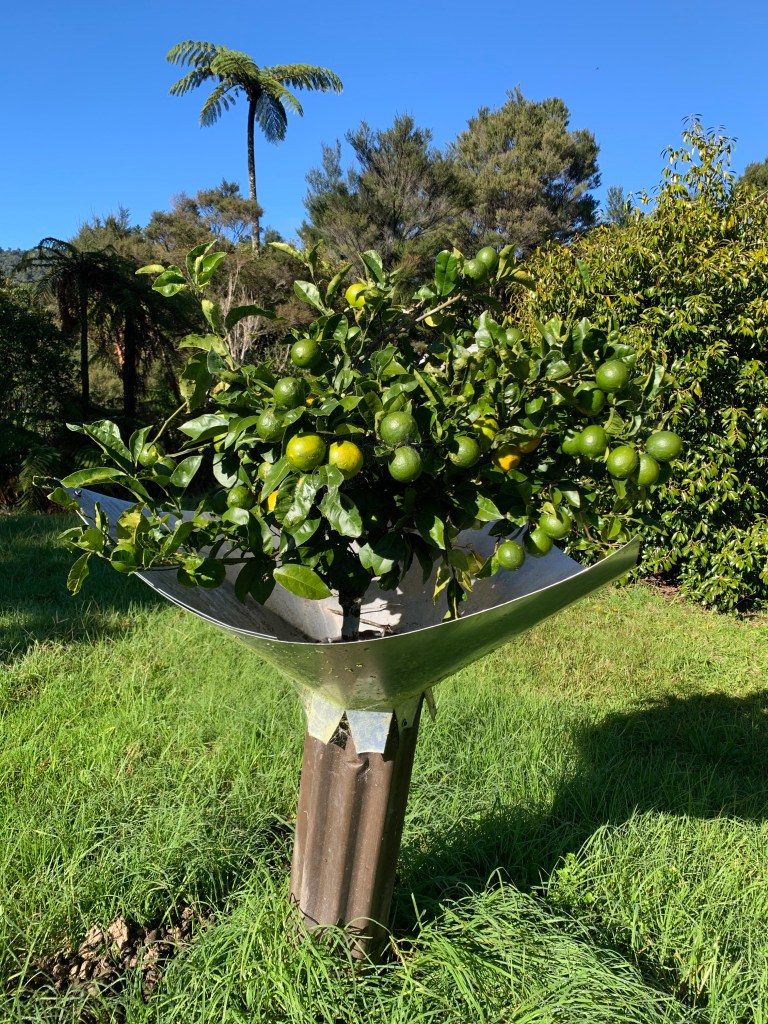
The possum shields on fruit trees at Shangri-la, show true kiwi innovation in action. At first Magic says they used corrugated iron around the trunks of the fruit trees and trained the tree high. However, eventually the possums figured out a way to jump up high above these iron sheathes. So, after much head scratching and experimentation they developed an aluminium shield on the trees and as the possums can’t see the edge of the aluminium against the sky, they can’t see where to jump and so don’t even try. The same method has worked around their gardens using fencing with an aluminium strip.

Aluminium possum shield on a lemon tree

Magic says as possums are very territorial, if one is removed another one will arrive, so it becomes an endless cycle, so the best way they have found is to just keep them out altogether. From what I could see success of this method was certainly beginning to show with lush fruit trees and gardens.

If you are interested to know more about Gentle World and Shangri-la, pop over to their website https://gentleworld.org/. You can also contact Magic through their website to arrange a visit.  

Growing food

Brassica Vegetables: Secrets to Thriving Plants

If you’ve been on any health kick, you’ve likely heard someone highlight the benefits of cruciferous vegetables. You’ve probably eaten some too. The most familiar in this group are brassica, e.g. broccoli, pak choi, cabbage and cauliflower. Others include the much-touted rock star vegetable kale. There is also the unusual-looking kohlrabi. My current favorite is the nutrition powerhouse collard greens.

However, eating these vegetables is one thing, but growing them can leave you feeling a little underwhelmed. You question your gardening skills when your broccoli is hit by white butterflies, the kale gets covered in whitefly and seedlings are demolished by slugs and snails. While much advice focuses on using slug bait, chemical fertilizers, and manures, there are some key principles. These principles can help you grow healthy plants.

Crop rotation 

Vegetables require a good level of soil fertility and by rotating crops around and incorporating cover crops and compost, the heaviest feeders like brassicas, can go into a more fertile part of the rotation cycle. Another advantage of crop rotation is it helps to reduce disease and weed pressure. Even if you are planting a mix of vegetables, some form of crop rotation of annuals can help soil health. 

Ideally, leave a gap of three to four years between each brassica crop. In raised beds, it’s possible to plant different families in each bed and rotate them between the beds.

If you have the space, start each crop rotation cycle with a green manure crop. We use a mixed cover crop including clover. We leave this in for 18 months and this acts to grow the soil microbiology and we cut and drop the cover crop multiple times during this phase. But even just one season using a cover crop like lupins and phacelia, to build fertility and organic matter, can help to get the soil humming.

After this initial cover crop I plant potatoes and once harvested, in go the first late summer brassica crops.

Mulching and compost

Red kale with lupins cut and dropped as a mulch

Mulch not only keeps the moisture in, but it also adds to fertility as it breaks down. You can mulch with cover crops, compost, straw, grass and even weeds (not invasive ones or ones which have gone to seed).

Seeds and seedlings

One key element to successful vegetables is growing robust seedlings. Experiment with different seeds and know that even the most experienced grower has suffered seed varieties that don’t do so well in their garden. Weather, climate and soil temperatures all play a part. 

Broccoli, collards, cabbage and kale need extra care before they go into the garden bed. If you are raising from seeds yourself, plant them into trays first, then prick them out when they have their first true leaves – the second pair of leaves – and then repot them into larger, deeper trays or individual pots. The extra boost at each stage gives them a boost of extra fertility. This also helps the plants develop a good root system before they go into the ground. Wait until they are about 8-10cm before planting out. I have found this also helps reduce slug and snail pressure on the plants.

Rocket, mizuna and a few weeds!

We use a seaweed fertilizer for our seedlings when they are establishing to give them a boost. We grow most of our seedlings in our own sifted compost, and it is rich in microbiology and the seedlings just thrive. We’ve spent quite a while perfecting this so if you can, try to get a compost heap underway. 

Cover your crops and choose your timing

Netting is essential when growing broccoli, cabbages, collards and kale in our gardens. Where we live, we find we can plant seeds in early spring and again in late January through autumn to establish the plants before the cooler months. When the white butterflies are around we keep the plants covered with netting until we hit cooler temperatures and the white butterflies are gone.  

There are also plants which help repel white butterflies and diversity in the garden creates habitat for beneficial insects in even the smallest garden. But with many brassicas I find covers are still essential.                           

Happy growing and eating…