Uncategorized, Critters, Garden design, Growing food

Pūngāwerewere: Lending a Hand (or eight) in the Garden

Our gardens take on even more meaning when we consider that they can be humming with diversity. Even the small potted plant on a deck can be home to someone else, busy trying to stay alive in this human-altered world. So who else might be there, and can their survival also help us grow food and beauty in our environment?

Pūngāwerewere (spiders) have not received so much attention in Aotearoa New Zealand. So, in this post, I dive just a little deeper into their world and how we can support their ongoing survival with Dr Phil Sirvid, curator of invertebrates at Museum of New Zealand Te Papa Tongarewa.
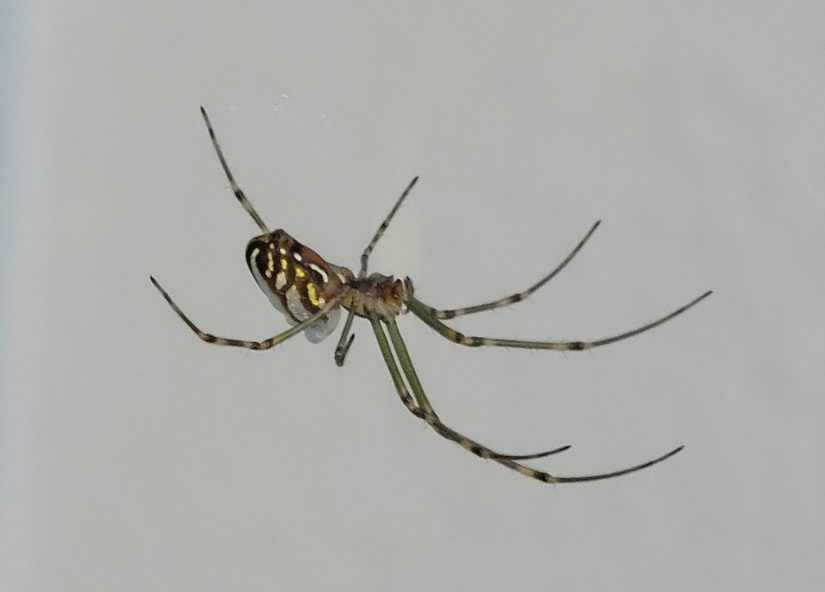
Spiders are in a class of animals called arachnids. They have two body segments called the cephalothorax and abdomen. Adult arachnids have four pairs of legs but lack both wings and antennae. Other examples of arachnids include scorpions, mites and ticks. 

There is much to know about spiders; some dance, some have better eyesight than us, a few are vegetarian, most are solitary, but some do work together to create huge webs, and some even disguise themselves as ants.1

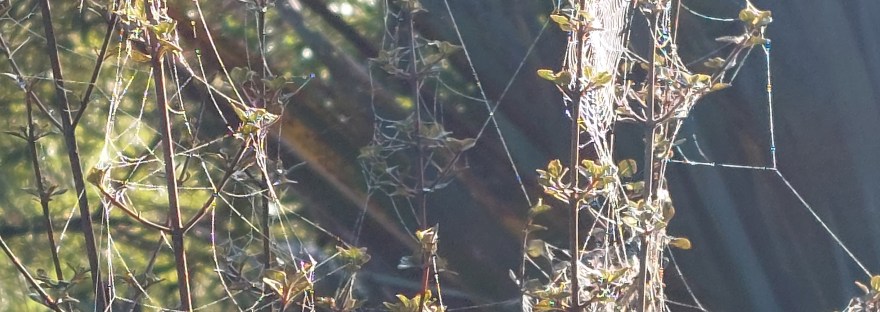
While not all spiders create webs, they all use silk in some way and will leave a drag line of silk behind them as they move around. Egg sacs can also be made of silk and used in reproduction.

One incredible thing I learnt from Phil was that some species use silk strands to disperse in a process called ballooning. Phil says, they will climb clear of the ground and use either the breeze or the Earth’s atmospheric electrical fields to lift and move. One theory is that spiders use little hairs on their body to detect this electric field, a bit like how human hair lifts through static electricity on clothing.2


Across the world, over 53,000 species of spiders have been identified so far. These are broken down into 138 families, including jumping spiders (Salticidae), orb weavers (Araneidae) and tunnelwebs (Porrhothelidae). Of those, more than 1,100 named species have been discovered in Aotearoa. Phil expects this number will continue to grow.

Phil explains that around 95% of our spider species are endemic –  only found in Aotearoa – and the other 5% includes those that have arrived from elsewhere in the world, e.g. Daddy Long Legs. This 5% also includes species that are native to both New Zealand and Australia. Phil says this makes our endemic species pretty special and we still have so much to learn about these spiders.

Phil suggests that in our gardens, the more diverse the habitat the more spiders you will have. A range of plants will encourage a range of insects and in turn a range of spiders.

When designing a garden, consider leaving some areas wild so spiders can live undisturbed. In a small urban space, this can be a pot with some weedy bits or around the back of a garage.

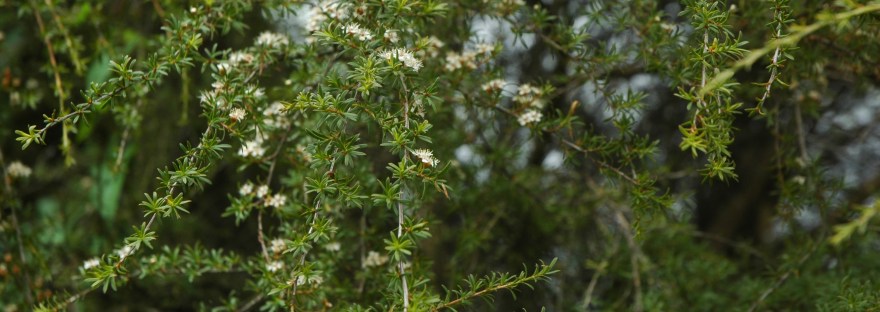
There are spiders who will live happily in human-built structures, such as sheet web spiders who will look for a place to hang and build their web. A wood pile might become a home for tunnel web spiders, and flowering trees might be home to flower spiders.

Pesticides will, of course, affect spider populations. Even if they don’t directly kill a spider, you will likely be killing their prey and making things more difficult for their survival. Sullivan et al, point out that in international research, “many studies have shown the positive effects that spider abundance and diversity have on economically important food protection systems, and many studies have demonstrated that enhancing adjacent habitat can conserve the biological control provided by spiders in these productive ecosystems”. 3 So rather than spray, enhancing habitat is the way to go.

I was saddened recently to see the range of specific spider control products after a recent visit to a large department store, so I suggest we need to start to talk about how incredible they are.

Phil reminds me that spiders are actually shy, and to them we are scary! There are some venomous spiders in New Zealand. However, we are unlikely to encounter them but if bitten, always seek advice. If you come across a spider insider, consider that spider might well be a visiting native spider who has lost their way, perhaps while looking for a mate and maybe we can just leave them be. And Phil’s advice in New Zealand if we need to relocate the spider safely to a more appropriate location? He suggests we pop a jar over it, slide a piece of cardboard underneath and move it gently, and remember, “even if you are not enjoying being close to a spider, you are the one with all the power”.
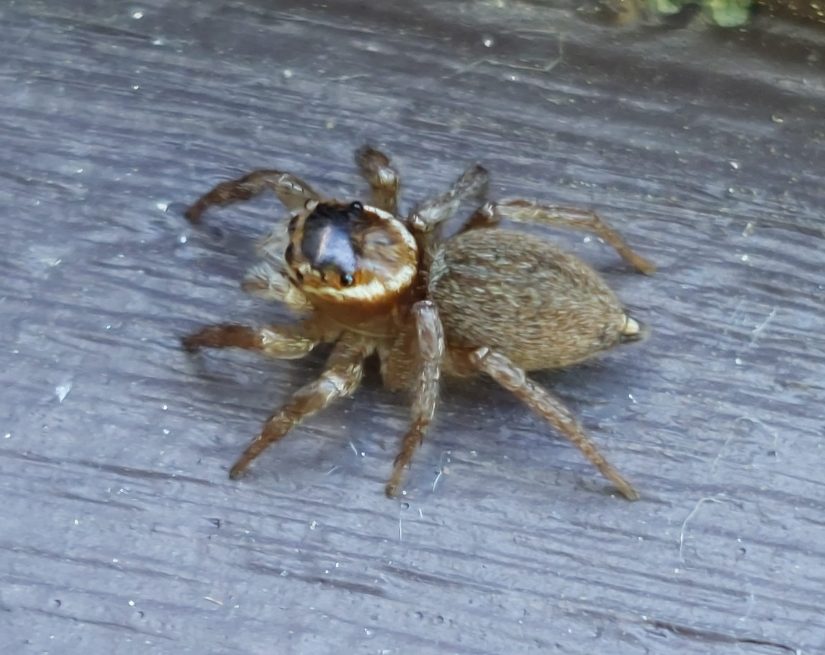
There is so much to know about spiders and I have only just touched the surface of the topic. I am now totally hooked on these precious animals. I intend to show them a lot of respect when I find them.

  1. M. Miller and M. Jemison (2014). Eight strange but true spider facts. https://www.si.edu/stories/eight-strange-true-spider-facts ↩︎
  2. Wishart. S. (2018). How spiders use electricity to fly. https://www.nzgeo.com/stories/electric-flight/ ↩︎
  3. Sullivan, N.J. Stringer, L.D., Black. A. & Vink, C. (2025). Harnessing spider biodiversity for sustainable horticulture: A call for research and conservation in Aotearoa New Zealand. https://newzealandecology.org/nzje/3600 ↩︎

Bees, Building fertility in the garden, Critters, Flowers, herbs and weeds, Garden design, Growing food

Creating a Balanced Ecosystem in Your Garden

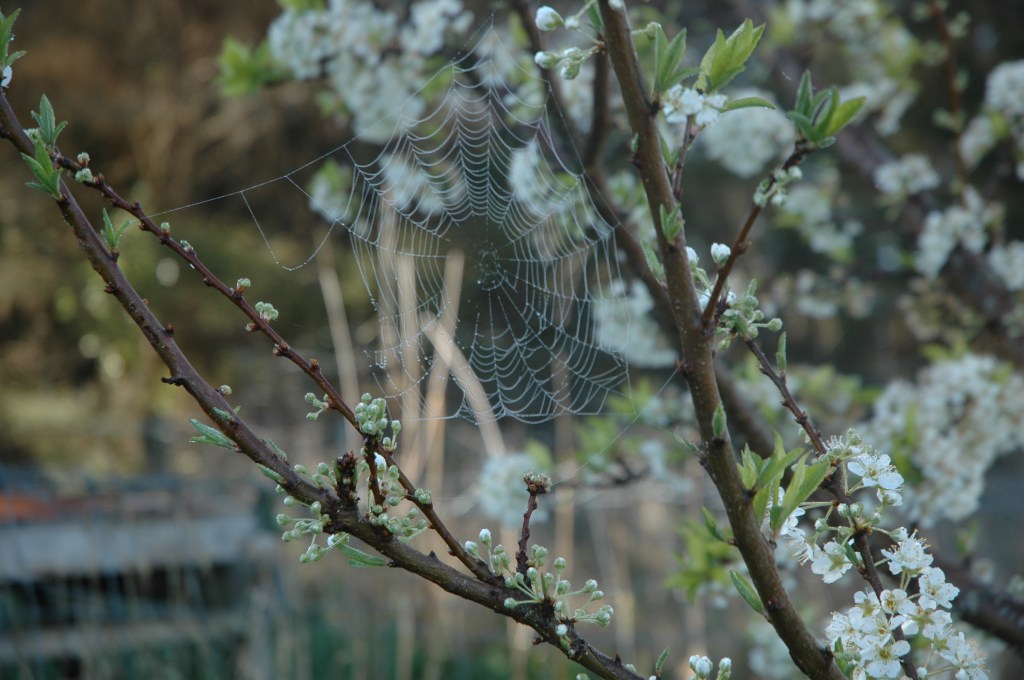
A close-up view of a spider web glistening in the sunlight, suspended between branches of a flowering tree.

It’s certainly a challenge managing those creatures that are in the wrong place in your garden. Knowing what to do and who to believe is difficult when you find an animal decimating your carefully tended crop.

Having a baseline can help us make garden decisions. With this foundation, plans can be made in line with your own ethics, climate, needs, and the surrounding environment. My aim is to grow organically, and I also try to create a diverse environment. This approach helps with my decision making.

Slugs and snails

An explosion of snails and slugs in any garden is an ongoing problem, especially during damp conditions. Most gardeners will attest that it’s pretty hard to get rid of any one species of animal permanently. Yet, there are some things you can do that can help create a balance.

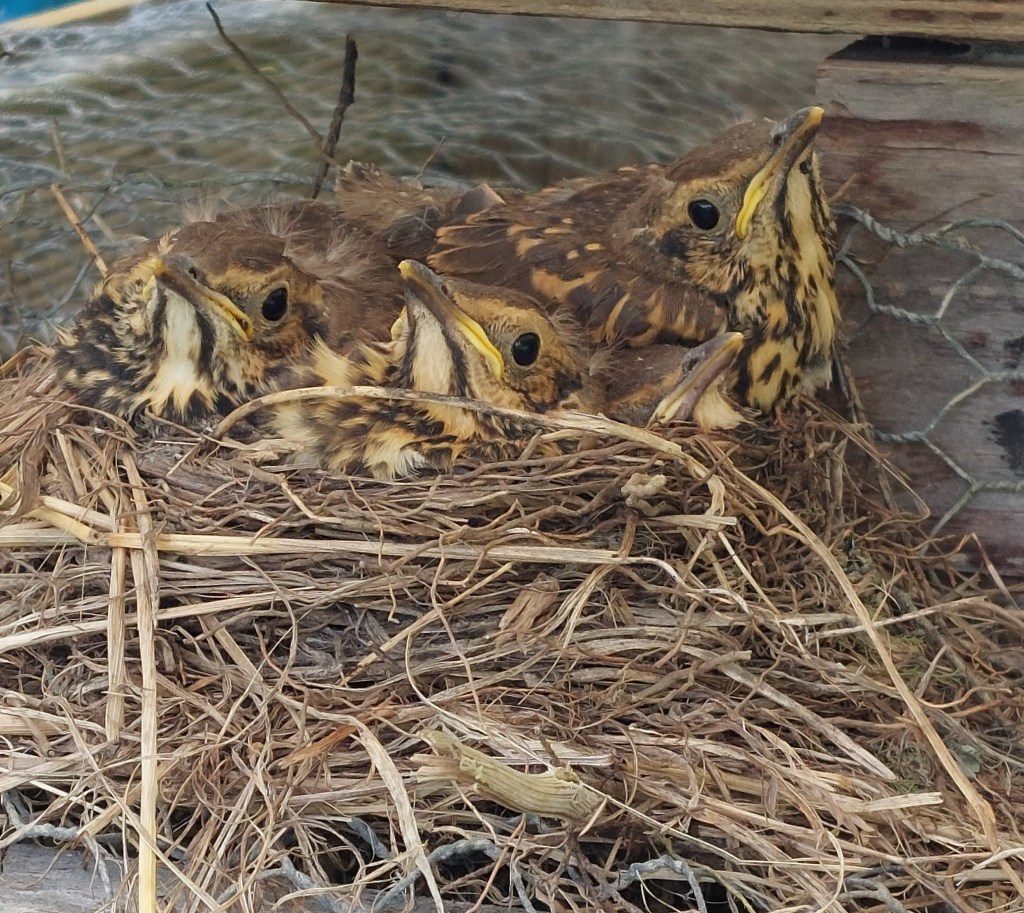
One way is to create habitats for the animals you want, while working to reduce the habitat of those you don’t. Some birds, like thrushes and blackbirds, eat snails and slugs so we encourage them. We try to create bird habitats with lots of trees and some scrubby areas. However, we also try to remove hiding places for slugs and snails. We do this by keeping the grass short close to the garden beds.

A close-up of four baby thrush birds with brown and yellow feathers, sitting together in a nest made of twigs and dry grass.
Without a cat around Mamma Thrush decided to have her babies
close to ground level.

Another popular method is to place pots upside down on the garden patch. This encourages snails to gather. Then, you can move them away from the garden. Be sure to take them far enough away as they will work hard to find their way back!

Slugs and snails particularly like smaller or weaker seedlings, so strong healthy plants are often less vulnerable. Growing some seedlings larger before planting them out in the garden has been a game changer. This is especially true for those plants that are vulnerable. You can read more about this here.

Sometimes it is also worth allowing one plant to act as a sacrificial plant. Leave it in place to let the slugs and snails eat it. This way, others can continue to grow strong. It seems counter intuitive, but we have had some success trying this method.

It’s also good to observe your garden to see what is chewing on your plant. Check at different times of the day. What looks like slug damage may in fact be something else.

Larger animals

You can protect your plants from seed and fruit eating birds by using netting. This method also works against small mammals. It’s a good idea to use netting that is small enough, so birds won’t get caught in it. Always keep a close eye on it and check daily in case there are issues.

Covering seeds in the ground with a green shade cloth can protect them before they germinate. This prevents seeds from being disturbed by birds. For carrot seeds this also helps to keep the soil moist which helps the seeds germinate.

Insects

Celebrate insects! It means you have diversity. But of course, you don’t want to lose all of your crops to an overpopulation of certain insects. Having a wide variety of plants in a garden is therefore very beneficial. Diverse plantings help diverse insect populations thrive.

Flowers of different shapes and sizes will support different insects’ feeding habits. For example, the small hoverfly, often referred to as a beneficial insect, needs different things at different stages. At the larvae stage, they feed on insects like aphids. At the adult stage, they will need flowers for pollen and nectar.1

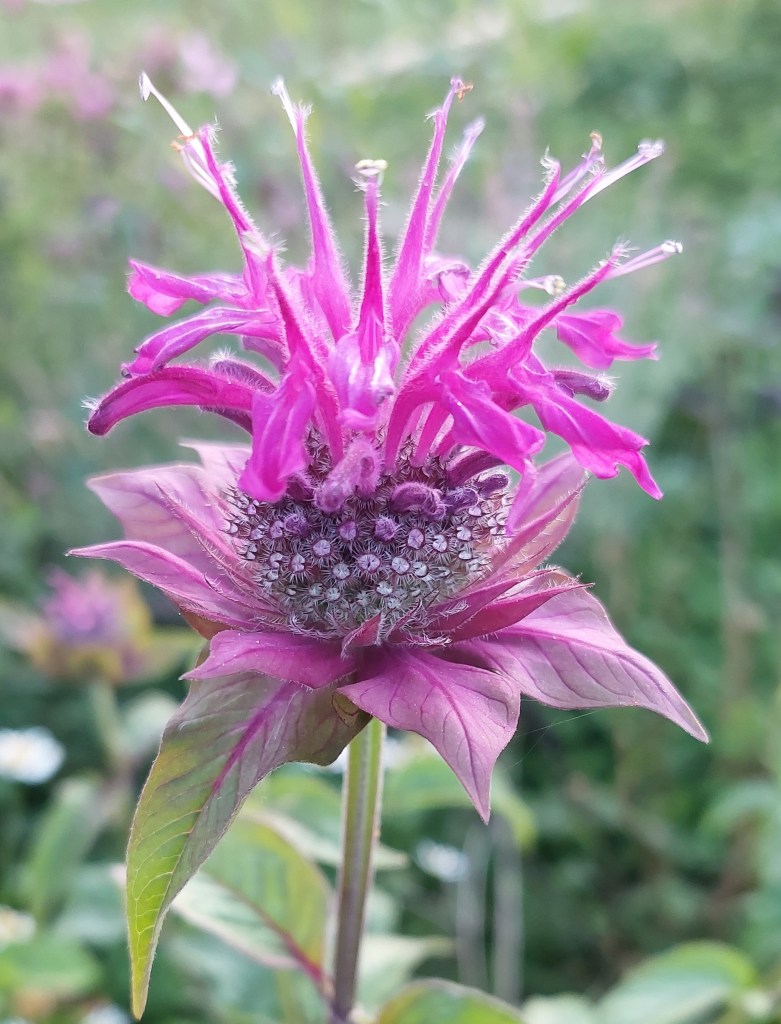
Close-up of a vibrant pink flower with elongated petals and green leaves, set against a blurred background of greenery.
Flowers entice insects and humans alike!

Create permanent habitats to support beneficial insects. You may wish to keep a section of the garden for perennial plants. Alternatively, dedicate a row in your vege patch. This allows for some longer-term insect habitats.

Aim to have flowers all year round, both native and introduced. Plant some eco-sourced natives to encourage native insects. Don’t forget about our native bees, ngaro-huruhuru. Other easy to grow plants to encourage beneficial insects include phacelia, alyssum, buckwheat, bergamot, cornflowers, chives and marigolds.

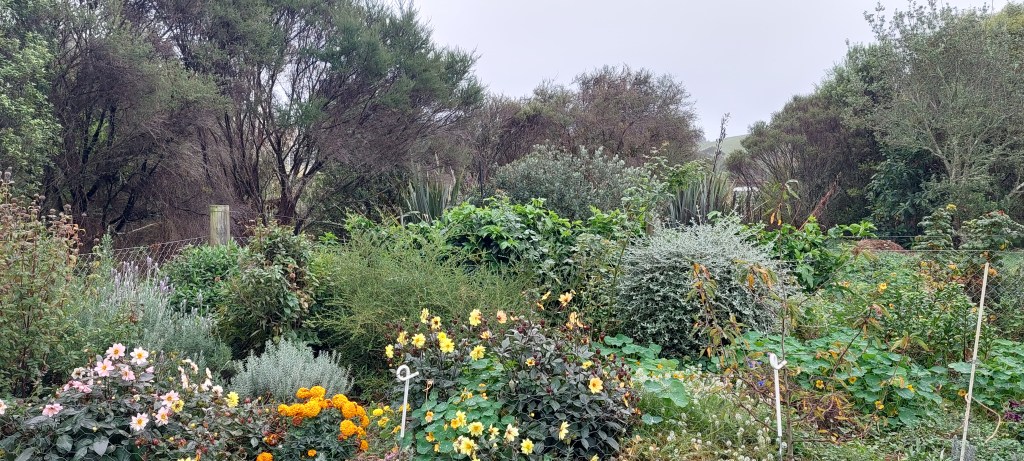
A diverse garden landscape featuring vibrant flowers, greenery, and various plants, surrounded by trees and a cloudy sky.
One of our wild and mostly perennial insect habitat plantings.

Spiders

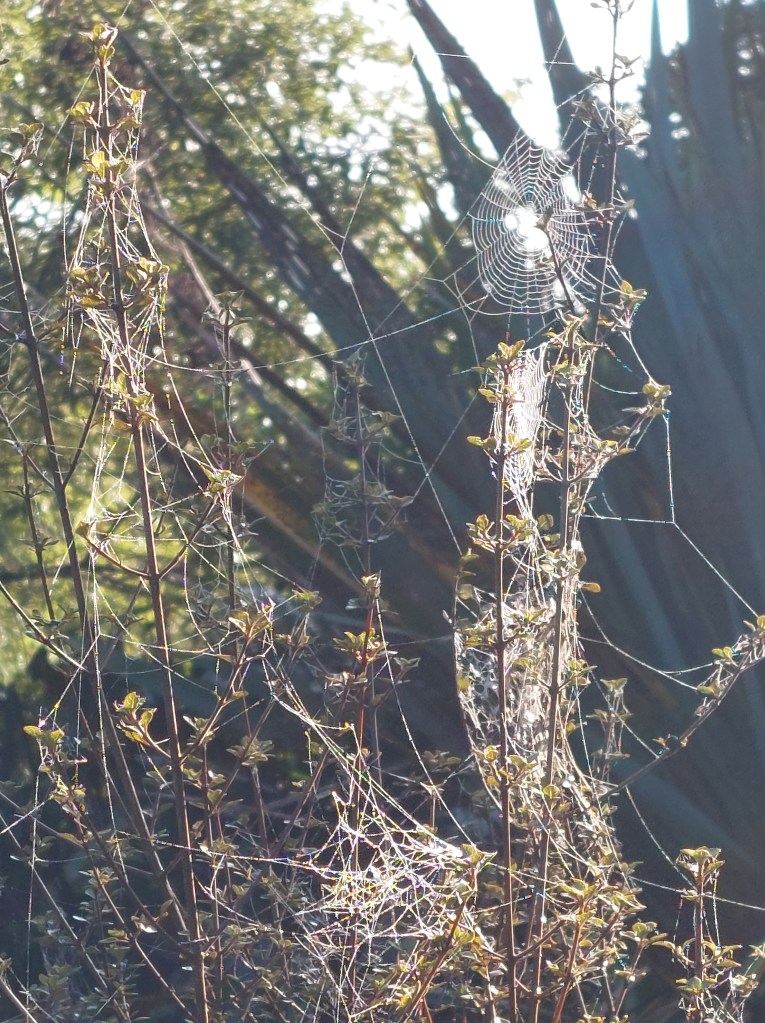
I’ll finish with the wonderful spider. They are a good sign that things are going well, and you have a diverse environment. They eat both the bugs you want and those you don’t. However, they can help prevent an imbalance of one species.

A close-up of a spider web intricate and glistening in the sunlight, draped between small plants with budding leaves. The background features blurred greenery.

Above all experiment and play in the garden. Even commercial and experienced growers sometimes lose crops and must go back to square one. It’s also another good reason to create diversity and spread the risk.  

  1. Martin, N.A. (2010, revised 2015). Small hoverfly – Melanostoma fasciatum. Interesting Insects and other invertebrates. ↩︎

Disclaimer
The information provided on this site is for general guidance only. Users of the information contained on this site must make their own assessment of the suitability and appropriateness of the products, services and information for their particular use.

Bees, Critters, Garden design

Ngaro huruhuru

An abundance of bees is one of the most exciting things for a gardener. However, while we talk about and admire the introduced honeybee, we often neglect to notice or perhaps have no knowledge of, our native bees. The obsession with the honeybee perhaps feeds our lack of knowledge. However, as we develop our gardens and farms, we’re in a great position to support the unassuming ngaro huruhuru – native bees.

Looking to extend my limited understanding of these native bees, I was lucky enough to have a chat to, Dr Ngaire Hart. An engineer, environmental scientist and ngaro huruhuru expert, Ngaire was happy to share her knowledge.

When Ngaire first started studying ngaro huruhuru in the early 2000s, there was very little published on our bees, and even today there is still not a huge body of work in the area. After trialing different ways to track bees, Ngaire designed her PhD to measure bee populations by capturing data on the number of active nests of ground-nesting bees.

Aotearoa NZ has only two main families of ngaro huruhuru; Colletidae and Halictidae. Both families are described as primitive (have not changed markedly over time). There are currently 28 recognised species of native bees; 27 are endemic species (occur only in NZ) and one species is also found in Australia.

Ngaire says that ngaro huruhuru may be mistaken as small flies, and often go unnoticed because of their size and colour. They can be anywhere from 4-12 mm long and are mostly black in colour. They are not aggressive and while they do have the ability to sting, she says it is doubtful you would feel it.

Ngaro huruhuru fall into two broad categories; the ground-nesting species Leioproctus and Lasioglossum, and the wood-nesting species Hylaeus, who construct their nests in hollow plant materials.

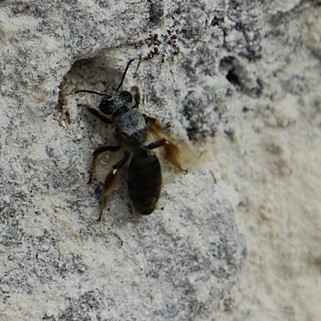
Female Leioproctus (ground-nesting bee)
Lasioglossum (sweat bee)

The ground-nesting Lasiogolssum, are commonly called a sweat bee because they like to land on you and suck the sweat off your skin. Ngaire says that these are very tiny bees. They are 4-8 mm long.

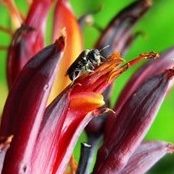
Masked bee foraging on a flax flower. She is hairless but has unique markings on her face.

Hylaeus, are commonly called masked bees because they have a marking on their face. They are hairless and don’t look like a bee. To the untrained eye, they may look more like a wasp. They nest in plant material, such as the dead kōrari (flower stem of the flax).

To find ngaro huruhuru, Ngaire says it’s about learning where they might be and going out and looking for them in your own backyard. Quite often they are there, but we just don’t notice them.

Look for them foraging on plants during summer. Go out and find harakeke, kānuka and mānuka – pause, stand still for a while and watch – if they are there, you will see them foraging. They are much smaller and tend to stay on a flower longer and sometimes you can see the females with pollen on their legs. Male colletids may be spotted as mating swards around scrubby areas and gorse and Ngaire suggests you look for movement. 

Habitat loss, pollutants and competition with non-native species are all threats to these animals. We need to be aware of things like roadside verges being sprayed when ngaro huruhuru are emerging – gardeners have been known to mistake them for wasps when they mass and mistakenly kill them.

The population of bees in the sites Ngaire has been studying is not increasing and, in some places, it is declining. It is possibly the same elsewhere, with changing landscapes and habitat fragmentation.

To support ngaro huruhuru in our gardens, it is important to try not to disturb their habitat. For example, some bees nest in old wooden cavities such as old logs or kōrari so Ngaire suggests leaving the kōrari on your flax to age and when you do remove them, put them somewhere for the bees to nest in. 

It is also an idea to plan your garden with more than just aesthetics in mind – plant more bee-friendly plants and natives and keep things organic and insect-friendly – using weedkillers in your garden might be killing a lot more than your weeds. 

Ngaro huruhuru also need us to advocate for them – learn and speak up about these unassuming creatures because, as Ngaire says, it is hard to care about something you do not know about. Another option is to support and get involved in community science. Ngaire is supportive of community science taking the lead to understand what is happening to our bee populations.

So, it seems like a good time to focus on our small unassuming ngaro huruhuru, learn more about them and provide habitats and plantings for them in our gardens.

For lots of great posters and resources visit Kaitiaki Creations

Ngaro hurururu photos courtesy of Dr Ngaire Hart