

This interview is from a visit to Shangri-la in Northland, where I spoke with gardener Magic about his experience growing food using a veganic system. The interview was inspiring and so I am now sharing it here.
Shangri-La is the New Zealand arm of Gentle World, a charitable trust in operation for 40 years with a base in Hawaii for the past 35 years.
To get to Shangri-La, I drove into the breath-taking Mangamuka Gorge and then down a long, winding driveway to a hidden valley of lush native bush and gardens. Along with the tropical weather of the north, I felt as if I had arrived in paradise.
Magic, has a background in growing commercially and organically, and now runs the gardens at Shangri-La veganically. He doesn’t use any animal by-products on the gardens, so no blood and bone, animal manures (except from one rescued horse, Isa), no slaughterhouse by-products or fish. The gardens continue to grow and flourish, with any animal inputs provided freely by the diverse bird and insect life.
How to build soil fertility with cover crops and compost
One challenge for all gardeners and growers is to build soil fertility. Vegan gardeners will sometimes say they cut out the ‘middleman’, or the farmed animal. Magic does this predominantly by relying on fertility that comes directly from plants. With green cover crops Magic explains, you are basically growing your own fertilisers.
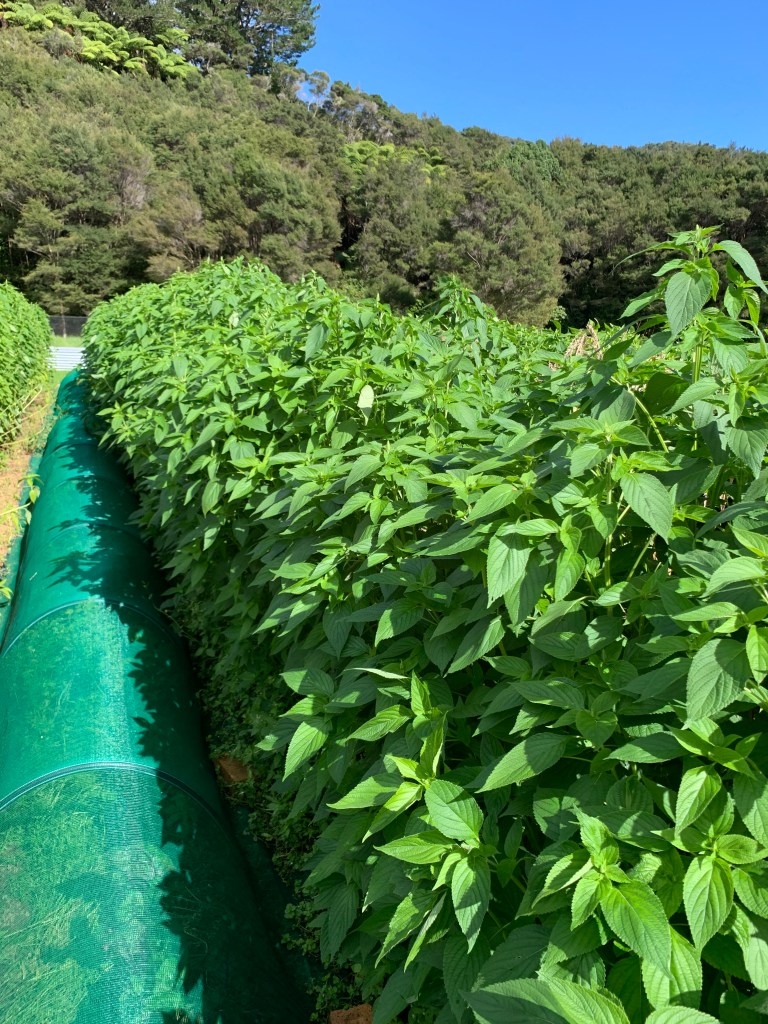
When vegetables are finished in a bed, he plants a cover crop as quickly to keep the soil covered. In the past he has used lupins, which he found really good, until the pheasants discovered their love for them. So now he uses chia plants. He says chia is amazing and he interplants it in the beds in summer, as it has a long growing season. Once it is sown it will continue through into winter when it can be dug in as a green manure crop. From his experience, Magic has found that it’s really good for the soil if you open it up and let the green manures do their thing.
Magic is also a fan of making compost, so when he is planting heavy feeders such as cucumbers and tomatoes, he will open up a row, put in the compost, cover and plant so the seedlings will go down and get the extra boost as they get their roots into it.
For other amendments he occasionally uses a bit of lime when the garden needs it. He says he has used rock dust in the past, but not for quite a while as the soil he is growing on is a very mineral rich alluvial clay silt. It’s a good example of knowing the soil you are growing in. If he were in an area where the soil is not good, he says he would look at doing raised beds or no dig.
Rotating crops and interplanting

Magic uses crop rotation and says it is a more sustainable practice than growing the same crop year after year, which depletes the soil of nutriments. Rotation also reduces the risk of plant diseases that can build up in the soil over time.
Magic also interplants crops which he says is beneficial in a number of ways; you can grow more plants per square meter, some plants benefit others by providing shelter or shade, and it can help with insect and disease prevention.
Can you use cover crops in a small garden?
What about if you only have a small city garden? Magic suggests cover crops again and shows me a small 2 x 1 metre bed he has close to the house. With a small garden he suggests breaking it up into a number of smaller areas, rotating between vegetables and cover crops. Once the cover crop is ready, he would mow or weed-eat it down, cover it to allow it to decompose slightly, and finally dig it into the soil before planting.
Managing other animals
Magic says an important part of vegan organic growing is protecting your crops from birds, insects, possums and rats by using nets and methods like tree protectors and fences.
The possum shields on fruit trees at Shangri-la, show true kiwi innovation in action. At first Magic says they used corrugated iron around the trunks of the fruit trees and trained the tree high. However, eventually the possums figured out a way to jump up high above these iron sheathes. So, after much head scratching and experimentation they developed an aluminium shield on the trees and as the possums can’t see the edge of the aluminium against the sky, they can’t see where to jump and so don’t even try. The same method has worked around their gardens using fencing with an aluminium strip.
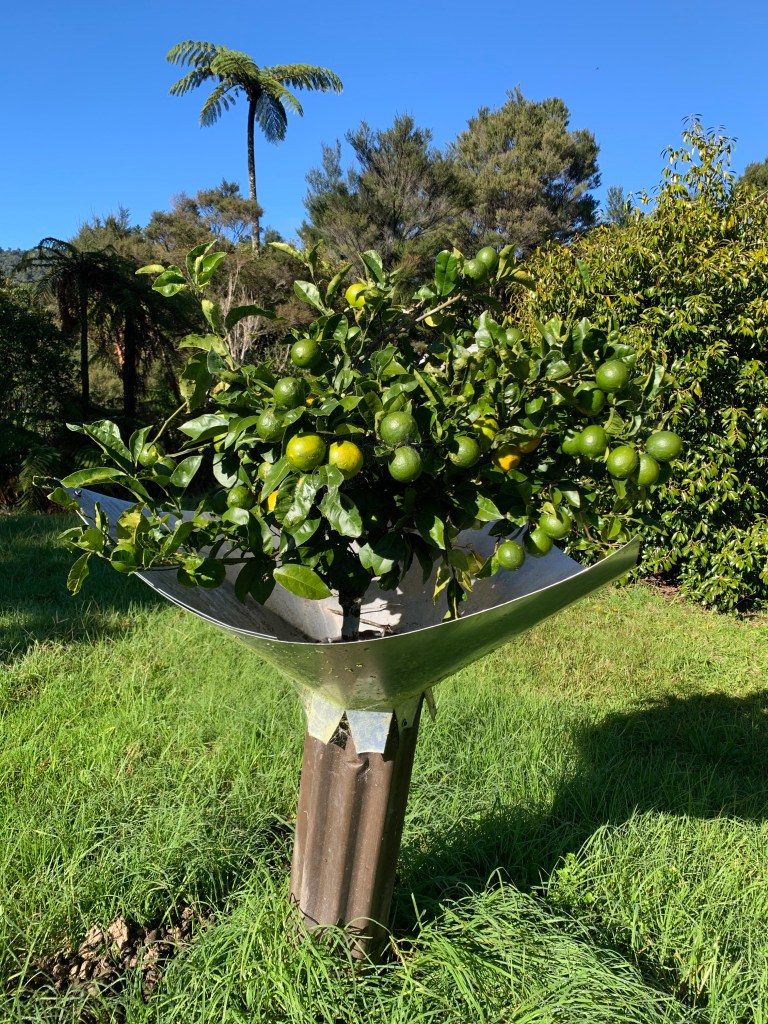
Magic says as possums are very territorial, if one is removed another one will arrive, so it becomes an endless cycle, so the best way they have found is to just keep them out altogether. From what I could see success of this method was certainly beginning to show with lush fruit trees and gardens.
Visiting Shangri-La
If you are interested to know more about Gentle World and Shangri-la, pop over to their website https://gentleworld.org/. You can also contact Magic through their website to arrange a visit.

 flowering bean organic gardens