
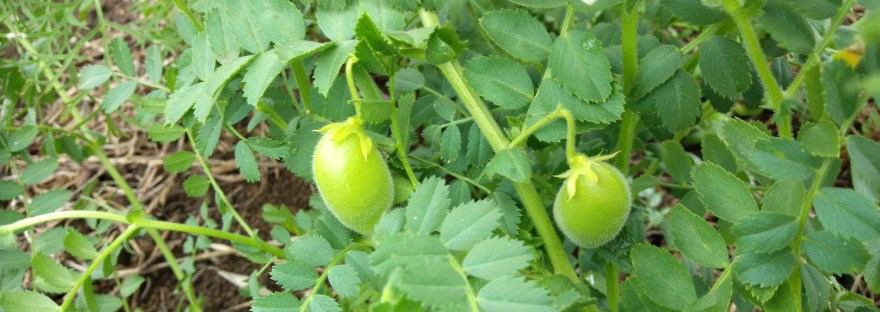

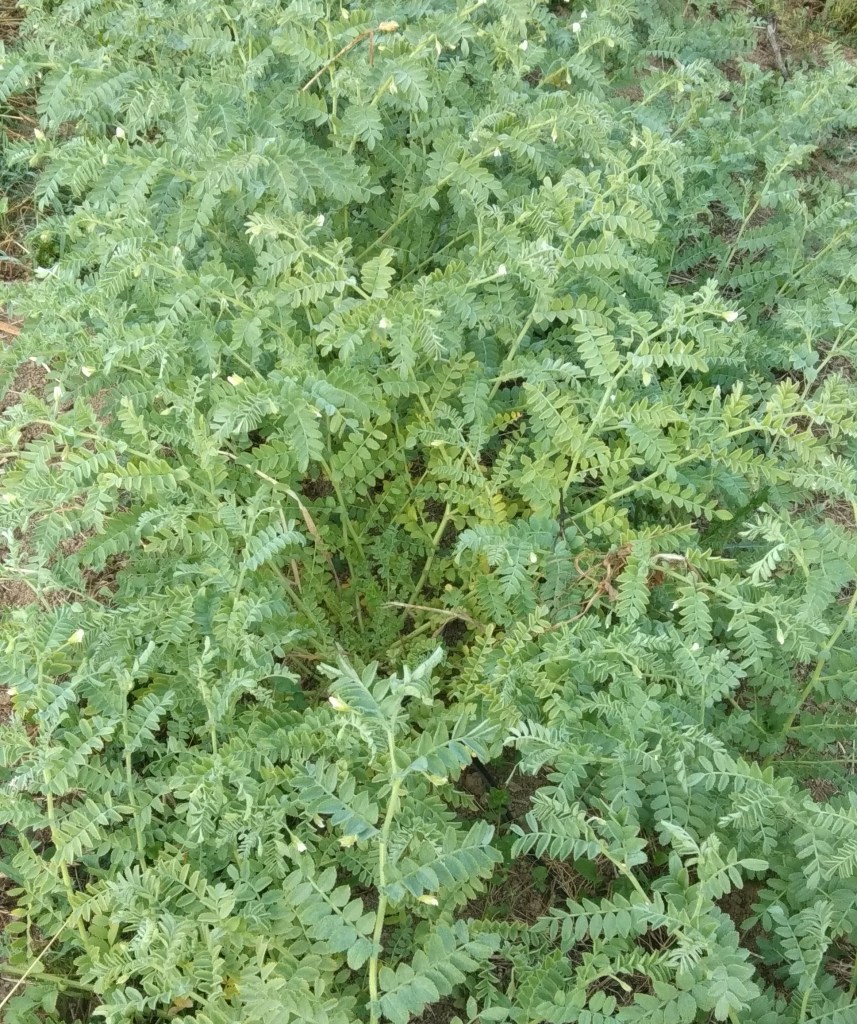
Chickpeas are still a novelty plant in gardens in Aotearoa, but one I think should become a staple. While the space required for a large harvest is not feasible for a small garden, I would still recommend them. They are beautiful, graceful plants and extremely easy to grow in the right conditions. I have also used chickpeas as a cover crop and experimented interplanting them with other crops.
Sowing chickpeas
Sow chickpea seeds directly in an area that gets at least 6 hours of sun. You will also need to be sure the area has good drainage.
Chickpeas can be planted in succession from spring through to early summer and after the danger of frosts have passed, although they can survive a light frost after planting. I have also sowed chickpeas in early autumn as a cover crop rather than for harvest.
Sow seeds about 30cm apart in rows spaced 50 cm apart. They can also be planted in a grid pattern with about 50cm between each plant. This spacing allows the plants to grow and shade the soil, which helps retain moisture during the summer. However, if you live in an area with high humidity, wider spacing will allow more airflow between the plants.
Water and mulch
Chickpeas can grow in quite dry conditions, but keep an eye on the soil and if it is dry, they benefit from a good water. Where we live, water can be a precious commodity in summer (although not always!) so our chickpeas don’t usually get any extra water throughout the summer. During a particularly harsh summer, I noticed the plants suffered, but still outperformed many of the other plants.
If you grow chickpeas in pots, they will need regular watering. It is a good idea to water them directly into the pot rather than above to reduce the potential for disease.
Mulch also provides a protective layer and helps prevent soil from drying out, regulates the soil temperature and suppresses weeds. There are a few options for mulching chickpeas, which are usually planted directly:
- Place the mulch around the plants once they are about 5 cm tall.
- Plant seeds into an area that is already mulched by pulling some mulch aside when planting.
- Grow chickpeas in trays first and then plant them out once established in a mulched area.

Harvesting chickpeas
Growing chickpeas through to the dry stage does take a while, with harvest after about 100 days in late summer. Before harvest, it is best to let them completely dry on the plant and then chop the plant from the base. If wet weather threatens, you can finish under cover if they are very close to being dry.
After harvesting, hang in bunches to finish drying in an area with good air circulation (we have also found spreading them over our clothes horse worked well). Once the pods start splitting and the peas are hard (you cannot make a dent with a fingernail) remove peas from the pods and store. Harvesting is a little time-consuming as they grow in small pods, with only one or two peas per pod. They also don’t pop out of a dry pod as easily as other dry beans. The dry plant then makes a great brown carbon addition to the compost.
Probably one of the hardest issues you will face growing chickpeas in New Zealand is getting the seed. I have also seen them for sale as seedlings, so they are starting to appear in Aotearoa. Perhaps we’ll even see some different varieties of chickpeas become available in the future.

 flowering bean organic gardens