
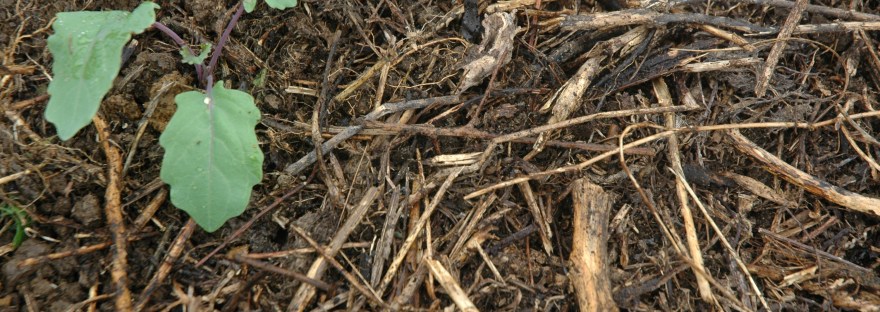

The soil beneath our feet has more life than we humans can possibly imagine. It was something which l, like many gardeners, had never given much thought to except when I saw visible animals such as earthworms. However, as we’ve started to understand some of the science of the soil, many growers and gardeners have changed their focus to nurturing the diversity of life below the soil surface.
My interest began when I stopped relying on most types of commercial composts and I had to learn the longer game of building fertility. Mulching was suddenly much more important as I learnt it was central to keeping the soil, the micro-organisms, and in turn the plants, in good health – building and retaining fertility in the garden.
The many benefits of mulch
Mulch keeps moisture in the soil in dry periods, helps retain warmth in winter and reduces weed pressure. Organic mulches add nutrients to the soil as they break down and are moved into the soil by earthworms and microorganisms. Mulches are important as they reduce the run-off of precious minerals from our soil by adding a protective barrier. This reduces the amount of runoff into our waterways, something we need to consider in cities as well as on farmland. So many benefits to a layer of mulch!!
Types of mulch
When using mulch, like all gardeners, you will have your preference on the look of your garden. Many people love a pristine garden, so the choice of mulch is important, others are happier with a messy look. It is individual preference. But I suggest, whatever the look, we should also be concerned with is what is going on under the mulch, rather than just what it looks like on top of the soil.
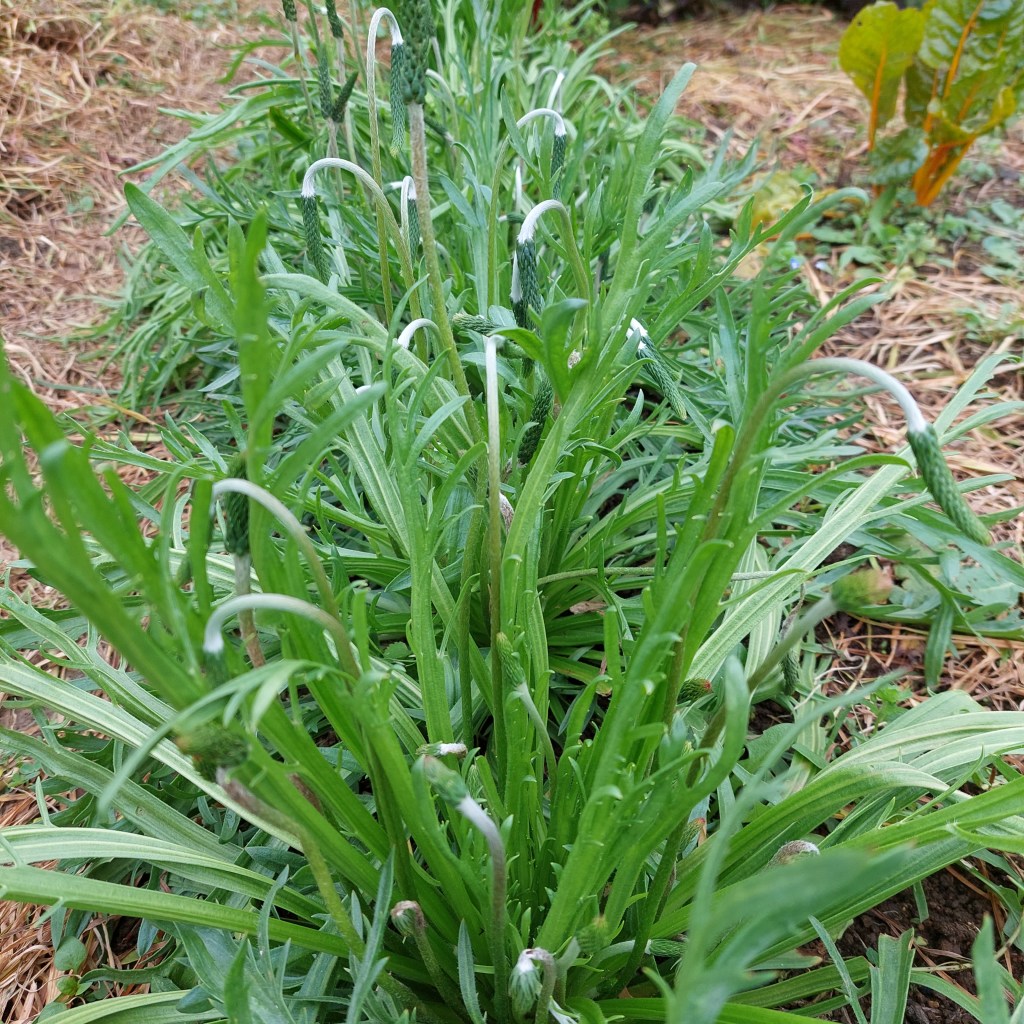
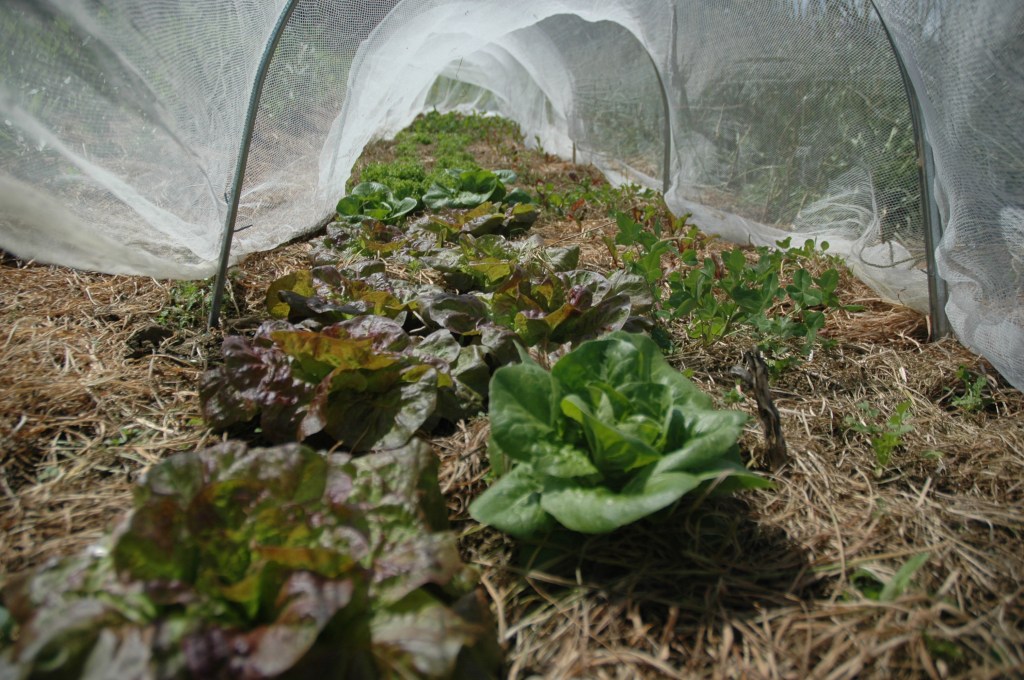
Mulching materials vary and what you use depends on what is available. We use a mix of mulch materials including long grass – cut with a scythe or weed eater before it goes to seed. When we apply it to the surface of our gardens we spread it in layers, gradually building it up over time to prevent it from heating up as it decomposes. We compliment this with compost when required.
There are lots of different materials you can use as a mulch including:
- clippings from your perennials
- weeds – but make sure you get them before they have gone to seed and don’t use those more determined weeds, such as creeping buttercup, as they may still continue to grow
- cover crops – cut and dropped
- compost
- living mulches – you can use plants such as clover for underplanting. We’ve had success underplanting courgettes with red clover and have used it in the tunnel house pathway cut and placed around the plants.
A few other pointers
Woodchip as mulch is a big topic on its own and one I will devote an entire blog to at a future point. There is much debate about when and where to use woodchip, but one great place to start is to use it on pathways. Here it keeps the weeds down and any fertility from the woodchip will move across into the beds as it breaks down.
Think about what you are trying to achieve with the mulch. If it is for heat loving plants, then mulch when the soil has warmed to keep in the heat and try to apply mulch before the winter cold and rain sets in.
Finally, don’t forget your container plants, mulching will help retain moisture and keep the soil life happy in your pots.

 flowering bean organic gardens