
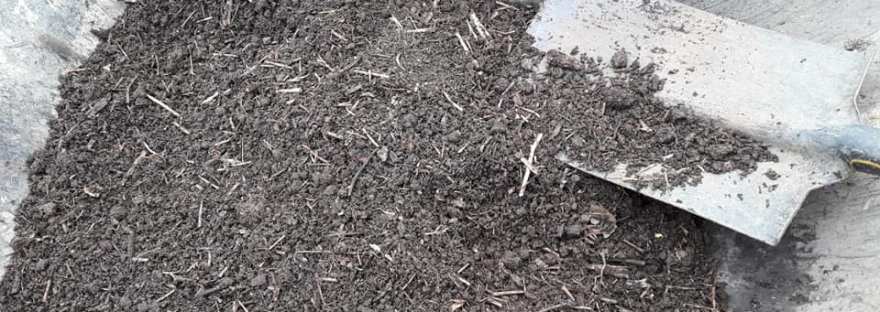
Along with green manures, crop rotation and mulching, making great compost is another useful skill to add to your garden toolkit. Unfortunately, it can be a challenge to buy in commercial compost that is free from factory farmed chicken manures and slaughterhouse by-products such as blood and bone. These ingredients do add nitrogen and nutrients to the compost, but can you do without these?
The first step is to recognise that we can use the fertility straight from plants and the wonderful interaction of all the animals and micro-organisms in the soil and we do not have to process this fertility through a select few species of animal. Composting is just a way of speeding up natural decomposition and activating all the microorganisms. Of course, you can also chop and drop your plants and let the microbes do the composting in situ, but excellent quality compost can really support your garden and you can also sift and use it for your seed raising mixes.

You don’t necessarily have to spend lots of money on compost bins, bays, activators or complicated systems. Nature already has a wonderful system and composting will just happen where you place the materials. I used to compost in divided bays, but I have found these just got in the way when turning the pile and now I just pile things up. Although for aesthetics and keeping a garden tidy these can be advantageous, especially in smaller gardens.
What is the difference between hot and cold compost?
The action of microorganisms produce heat in hot compost. As time progresses different organisms are at work on the compost and the temperature changes. Contrary to what I once thought, worms don’t really come along until near the end, along with lots of other insects and other invertebrates. If you are really dedicated you can use a compost thermometer and track the compost as you go and perfect the composition to get hot compost, just ensure the compost heap does not go above 65˚C and kill beneficial microorganisms in the pile.
Cold compost is a compost heap that slowly matures. It can take quite a long time but is useful if you don’t have a lot of material or time to compost. Just be aware that if you have seeds, invasive weeds or diseased material in a cold compost it will likely survive the process.
What is the nitrogen and carbon mix all about?
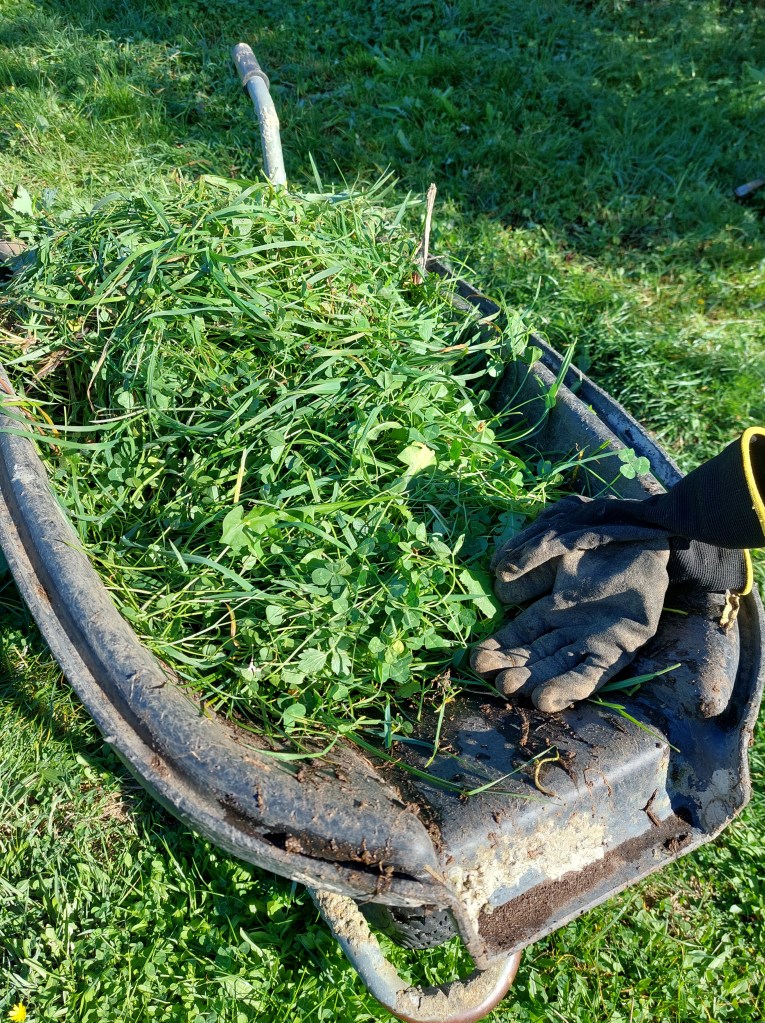
When making compost, the plants you add will be a combination of fresh greens and dried brown material, or somewhere in between. The browns are the carbon-rich ingredients – straw, hay, dried grass clippings, chipped branch wood, dried spent plants from the garden. The greens are the high nitrogen ingredients – freshly harvested green plants, green crop residues, vegetable peelings, green weeds (not in seed if you’re making cold compost), comfrey leaves and green grass. Note, that as greens dry and age, they drop in nitrogen levels.
You may have read about specific ratios of carbon to nitrogen in the compost materials such as 30:1, but it can be confusing and can make things more difficult to follow. This is great for the professional to master. But in the garden, I am all about keeping it simple.
The more carbon ‘brown’ materials in the compost the longer it will take, and some browns take a very long time, such as a pile of woodchips. If there are too many high nitrogen ‘green’ materials, such as too much fresh grass, you will get an anaerobic process and it will get smelly and compact. I try for a fairly standard mix of about one-third green and about two-thirds brown material. I keep a pile of brown materials and use them when I am ready to build a pile, but the greens don’t really keep, so I need to have these ready – generally after I have done a harvest. But remember you don’t have to do a layer method and can just add to the pile as you go, if the balance is not right turn and add more of another material.
Reducing the size of the material you add to the compost will also speed up the composition as it provides more surface area for the microbes and just chopping things up with a spade will help.
Making hot compost; layer, water, cover and turn
To make hot compost create layers with browns and greens, adding a spade of dirt in between each layer as this helps with microbiology – I can’t verify this, but it is simple to do and doesn’t hurt.
- Start with a layer of sticks and twigs to allow air to circulate.
- Build up with layers of greens and browns about a 10cm thick.
- Water each layer – unless the material is already wet.
- Top the last layer with another spade of dirt.
Once it is at least one metre square, cover it with a compost cover, to reduce all the nutrients washing away in heavy rain. I would recommend purchasing a compost over if you can, as a good compost cover will allow moisture in while also allowing the compost pile to breathe, but a shade cloth or sacks are also good.
Turn the compost piles several times in the first month or so, adding and checking moisture levels and aerating. Then I only turn occasionally as I want the compost to do its thing. However there is debate and there’s nothing wrong with not turning and experimenting.
One piece of advice? Don’t be afraid – it’s a bit like cooking- some like to research in depth and follow very specific recipes, others like to experiment. Many things will impact on the pile, the time of year, materials you have, size of the pile and your own your interest.
The compost is ready when there is no warmth left, it is a nice crumbly texture, and things have broken down in the pile. I have found a good hot pile can be ready within a few months, but I tend to leave it for about six months. A slow cooler pile can take 12 months or more. However, if the compost is not ready it will also stop things doing well in the garden. Sometimes even brought in compost is not quite ready and can benefit for some more time in a pile or mixed into your own compost and left to completely mature.
Should you wear gloves when making compost?
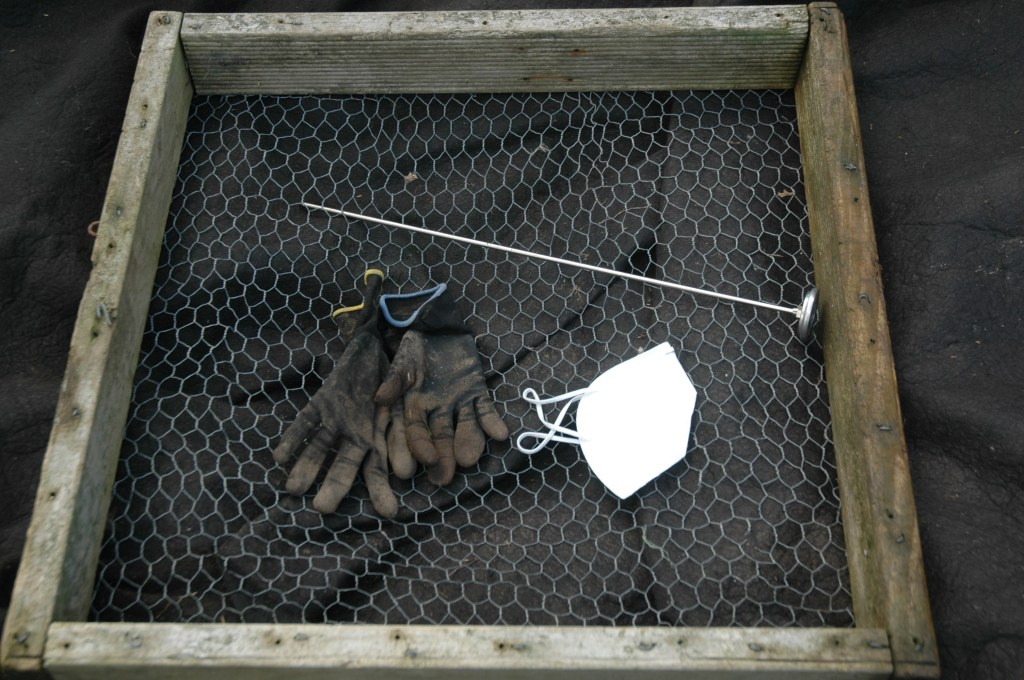
Yes, always wear gloves, and that’s not all. While you are perfecting the health of your compost pile make sure you keep your own health in mind. Wear a tight-fitting two-strap mask and garden gloves when making and working with compost and wash your hands well. Keep the compost moist when working with it to reduce dust. Remember a compost pile is full of living organisms and dust that you do not want to breathe in and can result in serious illness.
For more information on how to protect your health and composts, potting mixes and garden soils: Legionellosis (Legionnaires’ disease)

 flowering bean organic gardens